


The world is in a climate crisis — and in the waning days of what’s likely to be the world’s hottest year on record, a new United Nations report is weighing the ethics of using technological interventions to try to rein in rising global temperatures.
“The current speed at which the effects of global warming are increasingly being manifested is giving new life to the discussion on the kinds of climate action best suited to tackle the catastrophic consequences of environmental changes,” the report states.
A broad variety of climate engineering interventions are already in development, from strategies that could directly remove carbon dioxide from the atmosphere to efforts to modify incoming radiation from the sun (SN: 10/6/19; SN: 7/9/21; SN: 8/8/18).
But “we don’t know the unintended consequences” of many of these technologies, said UNESCO Assistant Director-General Gabriela Ramos at a news conference on November 20 ahead of the report’s release. “There are several areas of great concern. These are very interesting and promising technological developments, but we need an ethical framework to decide how and when to use them.”
Such a framework should be globally agreed upon, Ramos said — and that’s why UNESCO decided to step in. The new report proposes ethical frameworks for both the study and the later deployment of climate engineering strategies.
In addition to explicitly addressing concerns over how tinkering with the climate might affect global food security and the environment, ethical considerations must also include accounting for conflicting interests between regions and countries, the report states. Furthermore, it must include assessing at what point the risks of taking action are or are not morally defensible.
“It’s not [for] a single country to decide,” Ramos said. “Even those countries that have nothing to do with those technological developments need to be at the table … to agree on a path going forward. Climate is global and needs to be a global conversation.”
The ethics-focused report was prepared by a UNESCO advisory body known as the World Commission on the Ethics of Scientific Knowledge and Technology. Its release coincided with the start of the U.N.’s international climate action summit, the 28th Conference of the Parties, or COP, in Dubai. COP28 runs from November 30 through December 12.
To delve more into the goals of the study and what climate engineering strategies the report considers, Science News talked with report coauthor Inés Camilloni, a climate scientist at the University of Buenos Aires and a resident in the solar geoengineering research program at Harvard University. The conversation has been edited for length and clarity.
SN: There have been a lot of reports recently about climate engineering. What makes this one important?
Camilloni: One thing is that this report includes the views from the Global South as well as the Global North. This is something really important, there are not many reports with the voices of scientists from the Global South. The U.N. Environment Programme’s report this year [on solar radiation modification] was another one. [This new report] has a bigger picture, because it also includes carbon dioxide removal.
I’m a climate scientist; ethics is something new to me. I got involved because I was a lead author of a chapter in the [Intergovernmental Panel on Climate Change] 1.5-degrees-Celsius special report in 2018, and there was a box discussion about climate engineering (SN: 10/7/18). I realized I was not an expert on that. The discussion was among scientists in the Global North, who had a clear position in some ways about the idea, but not Global South scientists. We were just witnessing this discussion.
SN: The report raises a concern about the “moral hazard” of relying too much on climate engineering, which might give countries or companies an excuse to slow carbon emission reductions. Should we even be considering climate engineering in that context?
Camilloni: What we are saying in the report is that the priority must be the mitigation of greenhouse gas emissions. But the discussion on climate engineering is growing because we are not on track to keep temperatures [below] 1.5 degrees C. We are not [at] the right level of ambition really needed to keep temperatures below that target. There are so many uncertainties that it’s relevant to consider the ethical dimensions in these conversations, to make a decision of potential deployment. And in most IPCC scenarios that can limit warming to below 1.5 degrees, carbon dioxide removal is already there.
SN: What are some of the carbon dioxide removal strategies under consideration?
Camilloni: Carbon dioxide removal combines two different methods: Restoring natural carbon sinks, like forests and soils, and investing in technologies that are maybe not yet proven to work at the scale that’s needed. That includes direct air capture [of carbon dioxide] and storage; bioenergy with carbon capture and storage; increasing uptake by the oceans of carbon dioxide, for example by iron fertilization; and enhancing natural weathering processes that remove carbon dioxide from the atmosphere.
But there are potential consequences that need to be considered. Those include negative impacts of terrestrial biodiversity, and effects on marine biodiversity from ocean fertilization. As for sequestering carbon dioxide — how do you store it for hundreds of years or longer, and what are the consequences of rapid release from underground reservoirs? Also there’s potential competition for land [between bioenergy crops or planting trees] and food production, especially in the Global South.
SN: Solar radiation modification is considered even more controversial, but some scientists are saying it should now be on the table (SN: 5/21/10). What type of solar radiation modification is the most viable, technologically?
Camilloni: That’s an umbrella term for a variety of approaches that reduce the amount of incoming sunlight reflected by the atmosphere back to space.
There’s increasing surface reflectivity, for example with reflective paints on structures, or planting more reflective crops (SN: 9/28/18). That reflects more solar radiation into space. It’s already being used in some cities, but it has a very local effect. Similarly, increasing the reflectivity of marine clouds — there were some experiments in Australia to try to protect the Great Barrier Reef, but it seems that also the scale is not global.
Another proposed strategy is to thin infrared-absorbing cirrus clouds — I don’t really know much about that or if it’s really possible. And there’s placing reflectors or shields in space to deflect incoming solar radiation; I also don’t really know if it’s possible to do that.
Injecting aerosols into the stratosphere, to mimic the cooling effect of a volcanic eruption, is the most promising for a global impact. It’s not so challenging in terms of the technology. It’s the only way that we have identified that can cool the planet in a few years.
SN: How soon could aerosol injection be used?
Camilloni: We need at least 10 to 20 years before we can think of deployment. The limitation is that we need the aircraft that can fly at around 20 kilometers altitude. Those are already being designed, but we need about 10 years for those designs, and another 10 to build a fleet of them.
SN: What are some of the ethical concerns around aerosol injection or other solar radiation modification technologies?
Camilloni: These new technologies may be risky in the potential for exacerbating climate problems or introducing new challenges. There are potential risks to changing precipitation patterns, even overcooling in some regions. A key consideration in deciding whether to pursue them is the need for a full characterization of the positive and negative effects of the different technologies around the globe, and a comparison against the risk of not intervening.
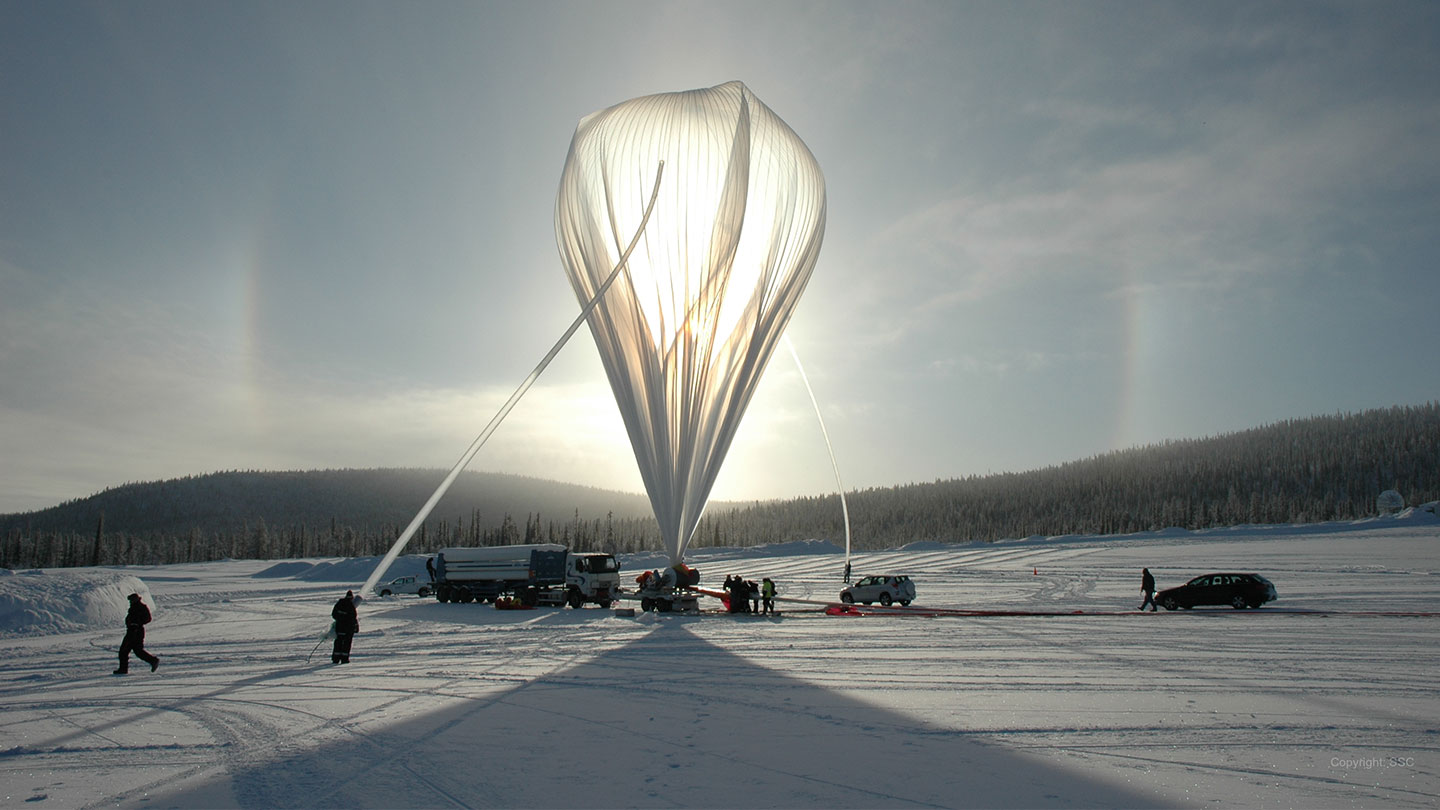
SN: In 2021, a research group at Harvard was barred from launching a balloon into the stratosphere to test equipment for possible future aerosol release. How might this report address similar studies?
Camilloni: In our report, we want to make a distinction among the different types of research. You can have indoor research — simulations, social analysis — and this is not so controversial. When you consider outdoor research — releasing particles into the atmosphere — that is more controversial. We are calling for more indoor research. We need to understand the potential impacts.
[For example,] I studied the impact of solar radiation modification on the hydrology of the La Plata Basin [which includes parts of southeastern Brazil, Bolivia, Paraguay, Uruguay and northeastern Argentina]. It’s the most populated region on the continent, and very relevant for hydropower production. And it’s already a very impacted region by climate change.
However, that research was based on just one climate model. We need more — more resources, more capacity building in the Global South. My research group was the first to explore those impacts in Latin and South America. There are others doing research on this over the next few months, but I can count those groups on one hand.
We need more resources to be part of any discussion. Those resources include the Loss and Damage Fund to provide support to nations most vulnerable to the climate crisis [agreed to at the end of COP27 in 2022]. But nobody really knows now how that will be implemented.
SN: The report’s release was timed to the start of COP28. What are you hoping that policymakers will take away from it over the next two weeks?
Camilloni: These recommendations are really important to have in mind, of course. We need more research to make a decision about whether this is a good idea or a bad idea. And maybe people will cut admissions faster if they’re afraid of climate engineering.