


Evan Gora still remembers the first time he climbed a tree that had been struck by lightning. The trunk of this strangler fig was as wide as a car. Its leaves were waxy and boat-shaped. At first glance, the tree didn’t look like it had been toasted by 300 million volts of electricity.
But as Gora hefted his way up, he saw faint signs that it had been zapped 10 days before. Leaves at the tips of some branches were scorched and dead. Lightning had jumped from these branches to neighboring trees, Gora realized.
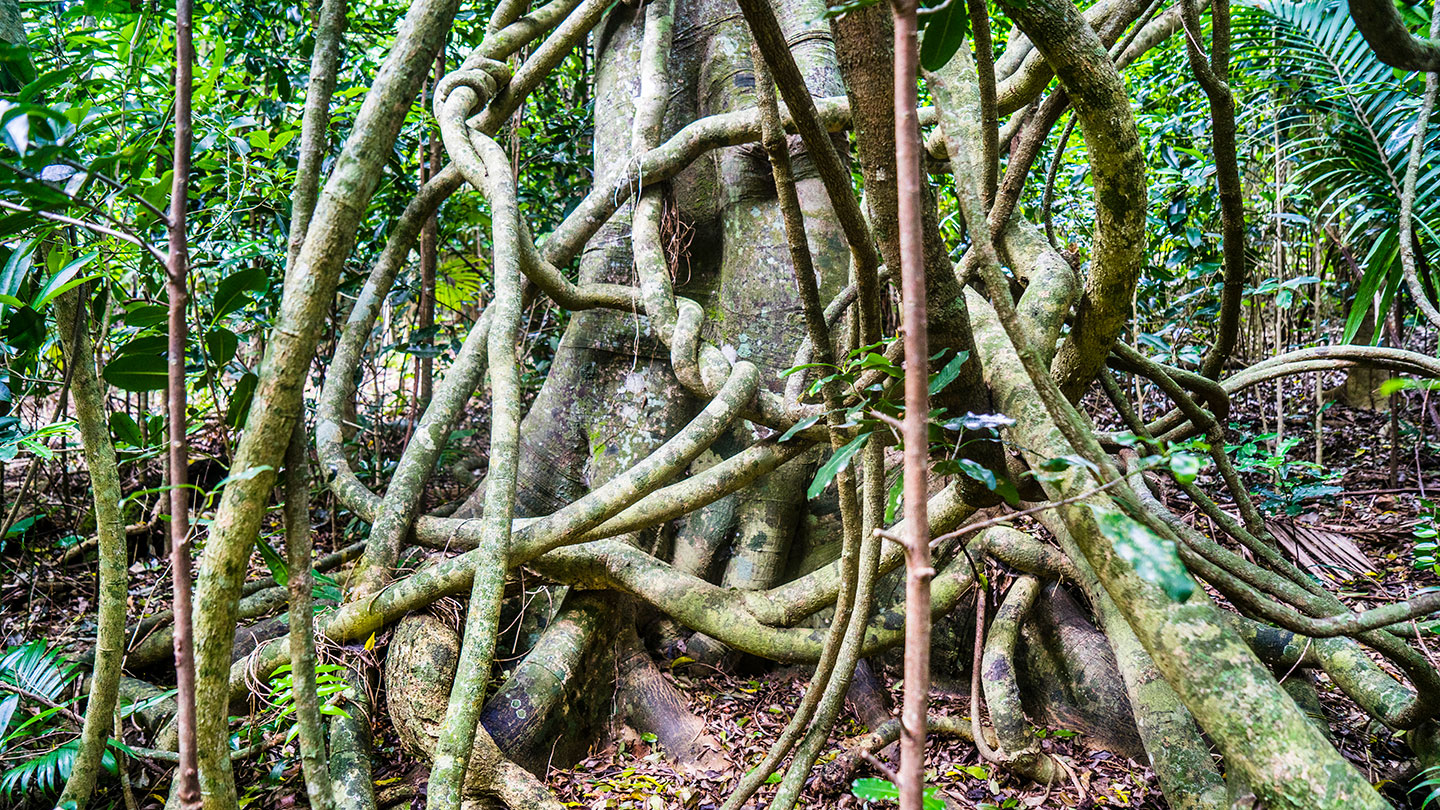
He also saw that the lightning had traveled from tree to tree across ropy growths known as lianas. They’re thick, woody vines. A single liana often extends across multiple trees, wiring them together. And if lightning strikes one, it can now be bad news for the others.
“Lianas are carrying [electric] current, like jumper cables, across the canopy,” says Gora. He’s a forest ecologist at the Cary Institute of Ecosystem Studies in Millbrook, N.Y. By connecting these trees, the vines “might amplify the effects of lightning.”
Gora encountered these zapped trees on Barro Colorado Island in Panama, a country in Central America. The trees grew on a densely forested hill in a lake. Here, the whoops of howler monkeys often ring through the air.
Lianas’ ability to spread lightning between trees is just one way they’re changing the tropics.
For 40 years, lianas’ numbers have been rising in tropical forests across South and Central America. Their spread may be related to severe dry seasons caused by climate change. But one thing is clear: These woody serpents are ripping forests apart.
Lianas smother trees in shade, stealing sunlight that could have fueled forest growth. They also topple trees. And as Gora has now found, they may cause more trees to die when lightning strikes.
All of this could have dire consequences for the future of Earth’s climate.
Carbon dioxide (CO2) levels in the atmosphere are rising faster than ever. People have been counting on tropical forests to absorb some of that extra CO2. But by killing trees and slowing their growth, lianas could now slow that CO2 uptake, boosting global warming.
Slow battles
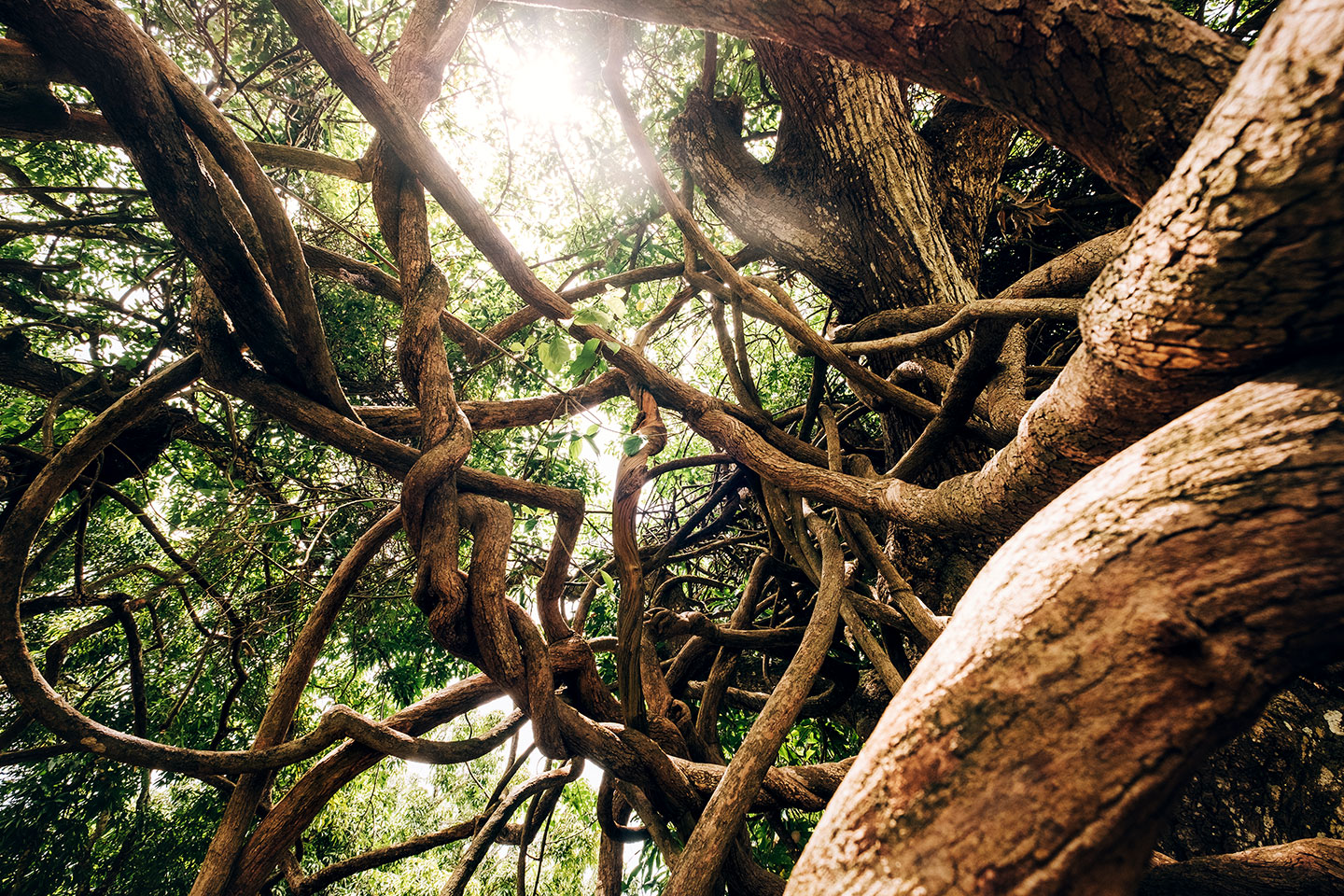
Walk through a tropical forest and you will quickly spot lianas. Their woody stems often spiral up tree trunks. Once they reach the top, they spread their leaves over the canopy.
Scientists call lianas — any of many viny species — “structural parasites.” Sturdy trunks and branches of trees support their weight. That means lianas don’t need to spend energy building strong stems. Instead, they can pack those stems full of tubes that quickly pump up water from their roots.
And because liana stems are so skinny, they can lengthen more quickly than tree trunks or branches. This allows them to spread rapidly through forests.
”They are contagious,” says Jack Putz. He’s a liana botanist at the University of Florida in Gainesville. He once found a single vine that had spread across 49 trees!
In the late 1970s, Putz climbed and explored the canopy on Barro Colorado Island. He was studying the brutal, slow-motion battles between lianas and trees.
Some trees, he found, try to defend themselves with flimsy branches. These break off easily, sending lianas crashing down. Palm trees, meanwhile, have saw-toothed leaves that slice through liana stems. Other trees protect themselves with flexible trunks and branches that thrash wildly during windstorms. This breaks lianas that have spread onto them.
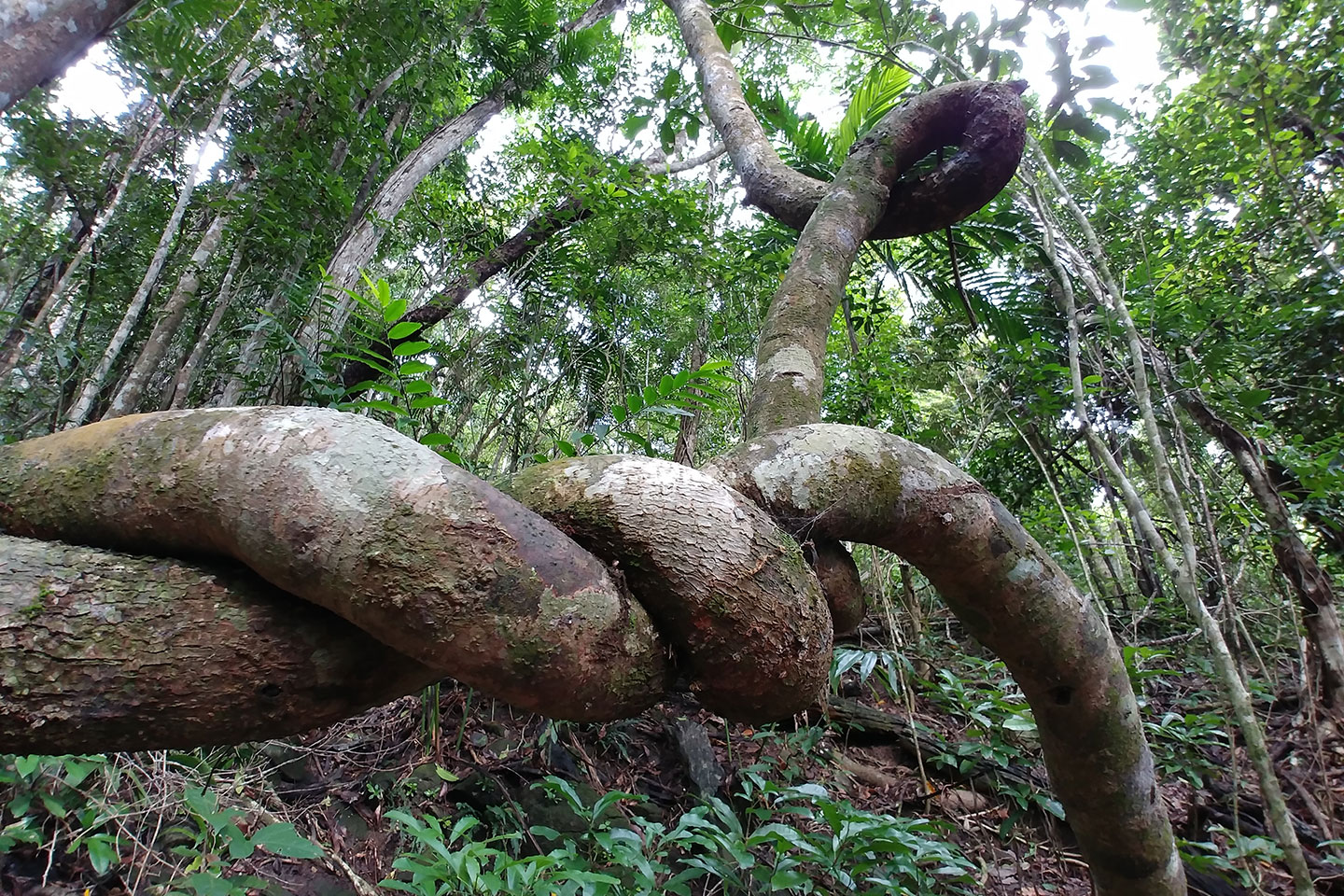
But when a liana manages to spread from tree to tree, the consequences can turn very serious. A falling tree can pull down several of its linked neighbors. This creates a sunny gap in the forest. Light-loving lianas then explode into these gaps.
Lianas “can capture a site and hold it open” for many years, says Stefan Schnitzer. He’s a forest ecologist at Marquette University in Milwaukee, Wis. He also works for the Smithsonian Tropical Research Institute in Panama, where he studies lianas on Barro Colorado Island.
Grow fast, die young
Lianas are a natural part of tropical ecosystems. The gaps they create in forests can help sun-loving trees take root. Their woody bridges from one treetop to another allow ants and other insects to get around. In fact, these vines boost the diversity of ant species in a forest along with the birds that eat them.
For these reasons, people had assumed lianas and trees had struck a natural balance — that tropical forests were unchanging. But in 1994, Oliver Phillips showed this wasn’t true.
Phillips is currently an ecologist at the University of Leeds in England. Back then, he was analyzing records of tree growth and death in 40 carefully studied tropical forest plots around the world.
From 1934 to 1960, he found, about one in every 100 trees each year died and were replaced by saplings. By the 1980s, that rate had nearly doubled.
This was a “great surprise,” Phillips recalls.
He wondered if higher CO2 levels were causing trees to grow more quickly — and die younger. Plants use CO2 to make the sugars they use to grow. But if a tree gets tall quickly, it is “entering this zone of increased risk” at a younger age, says Phillips.
Faster-growing trees often have weaker, spongier wood. So they are more prone to falling in windstorms. Tall trees also are struck more often by lightning. And they have a harder time pulling water from the ground up to their leaves. So they tend to suffer more during droughts.
After publishing his findings in the journal Science, Phillips continued monitoring forest plots.
In 2002 he published another bombshell, now in the journal Nature. Lianas in tropical forests across Central and South America were increasing by 1.7 to 4.6 percent each year. So between 1981 and 2001, lianas had almost doubled.
”People were healthily skeptical” of those findings, says Schnitzer at Marquette. They found them hard to believe. But since then, Schnitzer and others have also found lianas increasing in tropical forests across Central and South America.
Now they’re trying to understand why.
Survival strategies
Schnitzer and Geertje van der Heijden have uncovered one important clue.
Van der Heijden is a forest ecologist at the University of Nottingham, in England. From 2011 to 2016, he and Schnitzer monitored the growth of 1,117 trees and 648 lianas in a forest a short distance south of Barro Colorado Island.
Trees and lianas grew at the same rate during the wet season. But during the four-month dry season, they found, lianas grew three to four times more quickly than trees.
And during a severe drought in 2015 to 2016, trees stopped growing entirely. Meanwhile, lianas continued to grow at their normal rate.
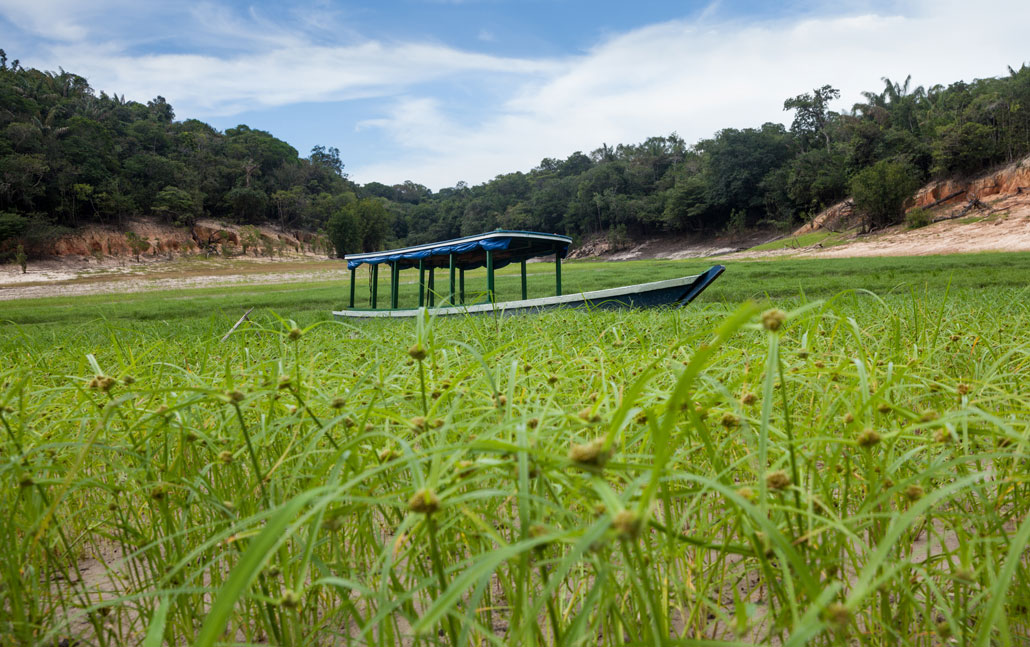
This difference could give lianas a huge advantage as the world warms, Schnitzer now believes. The dry season in the southern Amazon, for instance, has lengthened by about 20 days since 1980. In fact, hot droughts struck the Amazon in 2005, 2010, 2015 to 2016 and yet again in 2023. Billions of trees died.
But for several reasons, lianas do well in dry conditions. First, the wider tubes in their stems help them pull water up to their leaves better than trees do. Lianas also grow their roots more efficiently than trees do. It’s something ecologist Jiacun Gu reported in the February 2023 Journal of Ecology.
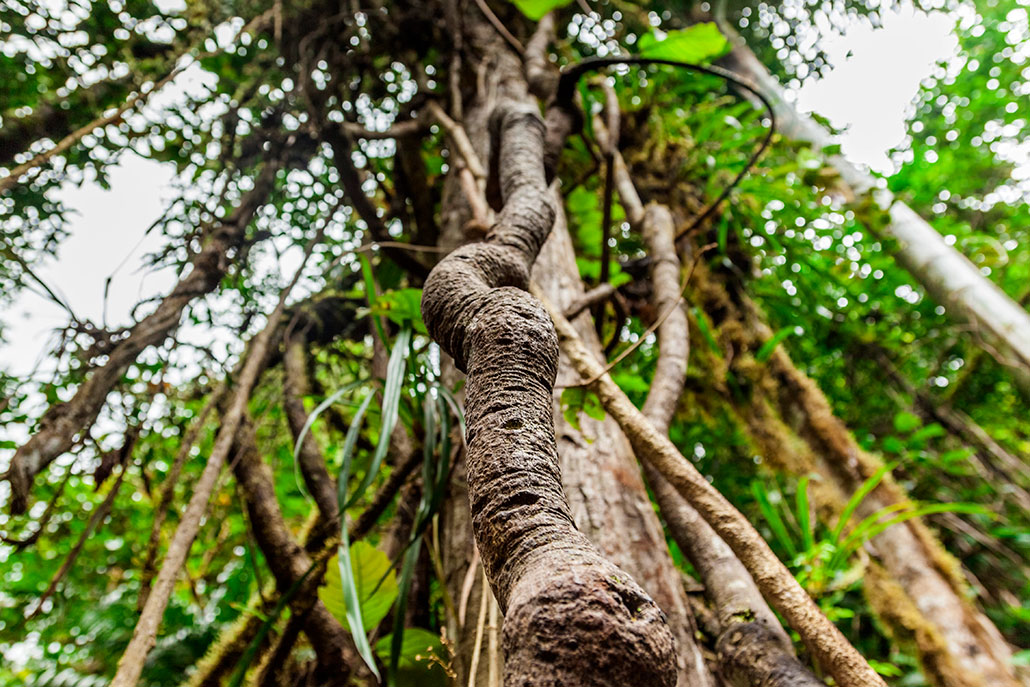
Gu works at Northeast Forestry University in Harbin, China. He compared the roots of 69 liana species to those of 127 tree species. Liana roots are less dense, he found. This makes them less “expensive” to grow than tree roots — that is, the plant needs less fuel to make them.
Each gram of root a liana grows adds more than twice as much root length as in a tree. That allows lianas to gulp up more water.
Lianas also store more food to help them get through dry seasons. Caroline Signori-Müller discovered this while earning her PhD at the University of Campinas in Brazil.
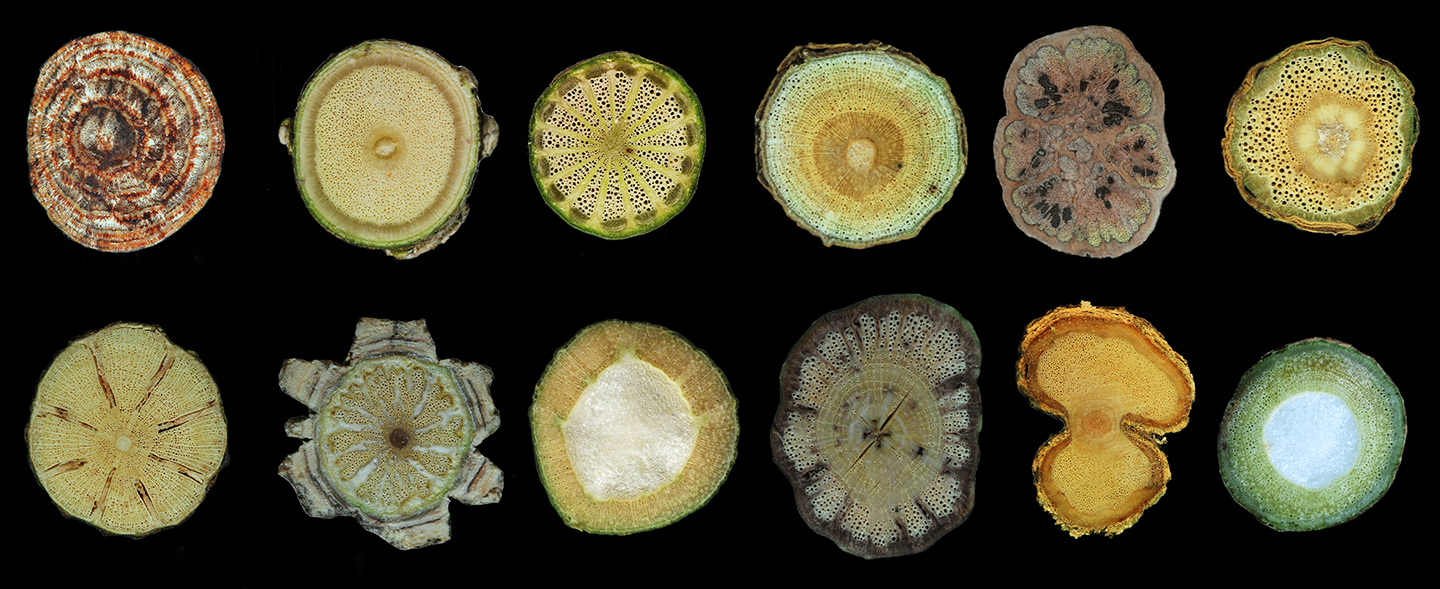
She compared sugar and starch levels in lianas and trees. Liana stems contain more of these carbohydrates than do trees, she found. This is important because plants can’t do photosynthesis as well when water is scarce. They can’t convert CO2 into sugars and starches nearly as quickly.
Stored carbohydrates provide raw material for building leaves and stems. The new findings suggest that “lianas have food to survive for more time” without water, concludes Signori-Müller. She is now an ecophysiologist at the University of Leeds. She shared her findings last August in Tree Physiology.
Those findings help explain why lianas grow more quickly than trees during dry times. It also could explain a discovery by one of Schnitzer’s former lab members, José Medina-Vega.
Fast and furious
From late 2015 to early 2017, Medina-Vega made frequent visits to the Parque Natural Metripolitano. This protected patch of tropical forest sits on the edge of Panama City. There, he stepped into a grated metal basket, and a crane would hoist him some 30 meters (about 100 feet) in the air. High in the treetops, he heard the squawks of toucans and the cries of monkeys interspersed with car horns and traffic.
Medina-Vega selected branches from dozens of trees and lianas. With a black permanent marker, he labeled every leaf on those branches — 6,861 leaves in all. He then returned every month to check each leaf and look for new ones.
This area of Panama has intense dry seasons. Trees and lianas lose their leaves during these times — just as many trees in North America lose their leaves in winter.
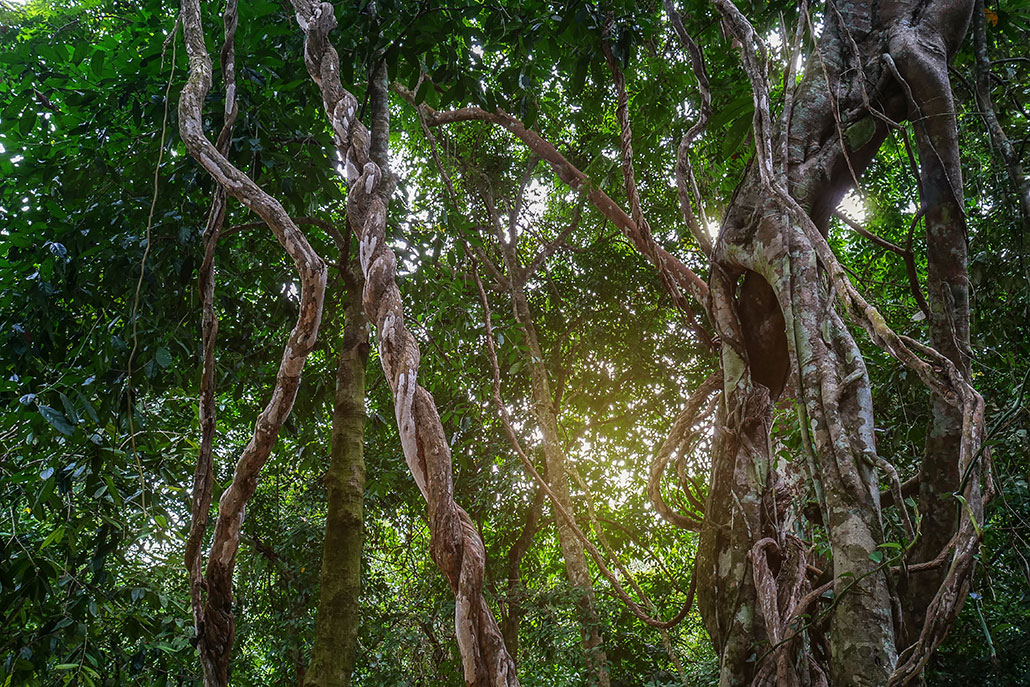
When the dry season ends, these vines grow new leaves about a month earlier than the trees do, Medina-Vega found. That’s probably because they have more food stored up. Sprouting leaves earlier also allows them to replenish food supplies sooner.
Compared to trees, liana growth is “fast and furious,” observes Medina-Vega. Their skinny stems lengthen 10 to 15 times more quickly than tree branches. Their leaves are also thinner than tree leaves. So lianas can grow them more quickly, using less energy. Their roots also share many of these “cheap” traits.
So lianas can more ruthlessly seek out sunlight in the sky and water in the ground.
“When the opportunity is there, they dominate, they occupy that place,” concludes Medina-Vega. He is now at the Smithsonian Global Earth Observatory Network in Washington, D.C. He first described his findings two years ago in New Phytologist.

How the vines multiply tree deaths
Gora’s lightning study shows how that liana dominance can trigger even bigger changes over time. When he found his first lightning strike in 2015, the trees were still alive. They’d been struck less than two weeks earlier.
But over the next few months, several trees slowly died. The scent of wounded trees attracted thousands of beetles. They chewed into them, shedding piles of sawdust onto the ground. In time, those piles would grow thigh-high.
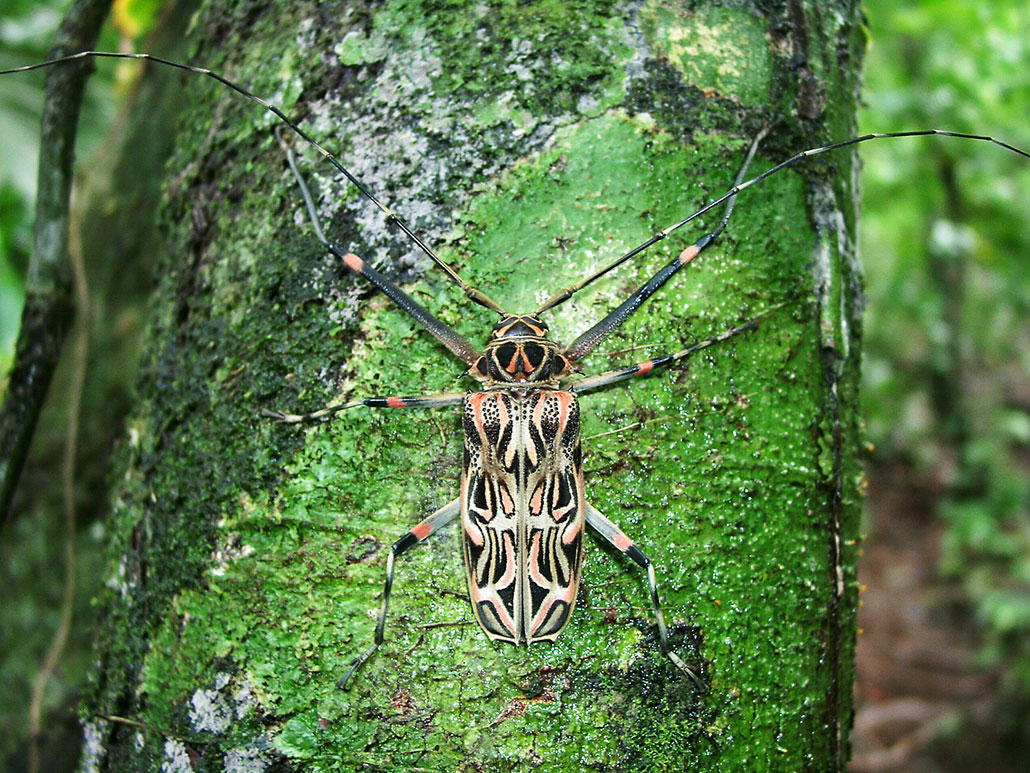
Between 2014 and 2019, Gora studied the effects of 78 lightning strikes on Barro Colorado Island. On average, each one damaged some 25 trees, killing five or six. But in one patch of forest thickly connected by lianas, a single strike damaged 113 trees! More than 50 of these died.
“Some of the most damaged sites appear to be places where there are lots of lianas,” says Gora. He, Schnitzer and Stephen Yanoviak reported their findings in the March 2023 New Phytologist. Yanoviak is Gora’s former PhD adviser at the University of Louisville, in Kentucky.
Clearly, lianas are “increasing mortality rates,” says Schnitzer. “Then they take advantage of that.”
And this vicious cycle could have major consequences for all of us.
Carbon problem
The world’s tropical forests currently inhale some 10 billion tons of CO2 each year. They turn it into leaves and wood. In doing so, they absorb almost one-third of the CO2 that people emit each year. This keeps global CO2 levels and temps from rising even more quickly than they have so far.
The spread of lianas may soon throw off that balance.
From 2012 to 2015, Schnitzer and van der Heijden oversaw an experiment just south of Barro Colorado Island that showed this. Using machetes, workers cut down all lianas in several plots of this forest. Three years later, they returned to measure tree growth there. They also estimated how much CO2 had been absorbed. Then they compared these plots to ones where lianas hadn’t been removed.
Lianas had reduced forest CO2 absorption by a whopping 76 percent. That’s about 8,900 kilograms (9.8 U.S. tons) per hectare each year. (A hectare is about 1.4 soccer fields.)
“Even small impacts [on these forests] can influence the global carbon cycle,” says Schnitzer.
Do you have a science question? We can help!
Submit your question here, and we might answer it an upcoming issue of Science News Explores
The boom in lianas over the past 40 years may already be preventing forests from absorbing millions of tons of CO2 each year.
Between 1990 and 2015, the amount of CO2 absorbed each year by the Amazon fell by 60 percent, one large study showed. This was mainly due to higher rates of tree death.
Trees that grow faster are dying younger. Lianas, droughts and heat waves are all taking a toll.
And people continue to build roads and cut large swaths of forest. Whether trees fall on their own or are cut down by us, lianas will benefit. They will burst into those sunlit gaps, further tearing into the ragged edge of forests.
“Tropical forests, the green lungs of the planet, are actually decreasing in their ability to sequester [CO2],” says Schnitzer. And, he adds, the fact that lianas are increasing at the same time “may not be a coincidence.”