


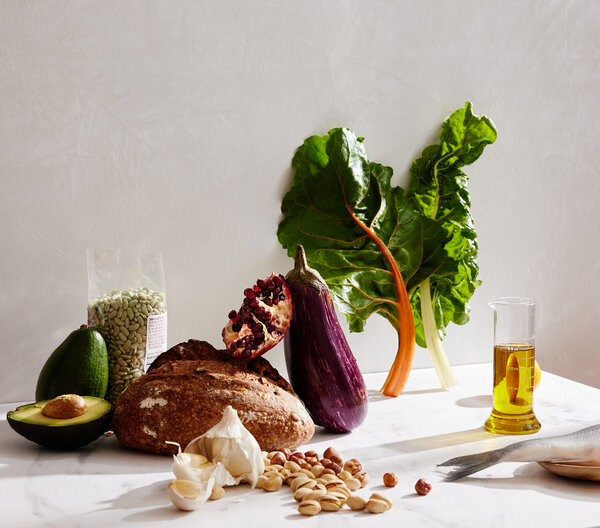
This is Day 1 of Well’s Mediterranean Diet Week.
For me, a meal isn’t complete without a hunk of whole-wheat bread to dip into my soup, or a pile of brown rice to soak up my curry. Whole grains provide sustenance and comfort.
And lucky for us, they’re a main feature of the Mediterranean diet, which is an approach to eating that emphasizes whole, mostly plant-based foods.
Whole grains are different from refined grains in that they contain all three parts of a grain kernel: the starchy endosperm, which provides carbohydrates, protein and some B vitamins and minerals; the germ, rich in healthy fats and vitamins; and the bran, a concentrated source of fiber, minerals and B vitamins.
When we eat whole grains, the fiber and healthy fats slow digestion, resulting in smaller spikes and dips in blood sugar. Fiber can also reduce blood cholesterol levels, support a healthy gut and lower the risk of developing colorectal cancer, cardiovascular disease and Type 2 diabetes.
Aside from great nutrition, whole grains add a variety of flavors and textures to any meal: the nutty complexity of farro, the heartiness of barley and the crunch of oats toasted in granola or on top of a fruit crisp.
Below, we offer strategies for eating more whole grains, along with some recipes selected by our colleagues at NYT Cooking.
What to keep in your pantry
To help you meet your whole-grain goals, try stocking up on these affordable and shelf-stable basics:
-
Whole-grain, low-sugar breakfast cereals like shredded wheat, muesli and wheat flakes
-
Whole-grain bread
-
Whole-grain crackers to dunk into hummus or top with cheese
-
Popcorn (consider popping it yourself so you can control the ingredients)
-
Dried grains like millet, farro, brown rice, quinoa, bulgur and barley to use in main dishes, as simple sides or as additions to soups and salads
Meal ideas that center whole grains
Once you have some ingredients on hand, you get to start playing around with recipes.
For each day of our Mediterranean diet series, we and our colleagues at NYT Cooking have selected a few recipes that incorporate the ingredients we’re highlighting. This is not intended to be a meal plan, but rather inspiration for how to include more of these healthful foods in your week.
For breakfast, you might have whole-wheat toast with peanut butter and a side of fruit, plain yogurt with fruit and granola, or a steaming bowl of oatmeal topped with nuts and dried fruit. You could try Martha Rose Shulman’s cozy bulgur maple porridge, or Melissa Clark’s granola with dried apricots and pistachios; the not-so-secret ingredient, Melissa says, is olive oil, the favored oil of the Mediterranean diet (more on that on Day 5).
Lunch could be a sandwich on whole-wheat bread — maybe made with cheese, avocado, hummus, lettuce and tomato — or leftover veggies wrapped in a whole-grain tortilla. But if you have time to cook, Yewande Komolafe’s toasted millet salad with cucumber, avocado and lemon is light and packed with flavor. Or try Sohla El-Waylly’s quinoa and broccoli spoon salad, with crispy raw broccoli and crunchy pecans to complement the fluffy quinoa.
For dinner, I’m trying to break my usual bread-and-rice routine to cook some whole grains I don’t use often enough. This could be as simple as quinoa or millet with a side of veggies and steamed fish. Or maybe Kay Chun’s baked barley risotto with mushrooms and carrots or Yasmin Fahr’s farro with blistered tomatoes, pesto and spinach. For the chilliest January nights, I’m thinking of Melissa Clark’s turkey, farro and chickpea soup. Join me?

This is Day 2 of Well’s Mediterranean Diet Week. To start at the beginning, click here.
I’m not telling you anything you don’t already know: Fruits and vegetables are nutritional superstars, packed with essential vitamins and minerals, as well as antioxidants, anti-inflammatory compounds and gut-healthy fiber.
Such nutritional riches may explain why people who regularly eat fruits and vegetables tend to live longer and have reduced risks of high blood pressure, cardiovascular disease and some types of cancer.
Yet most people in the United States don’t consume enough.
American fare tends to relegate fruits and vegetables to small portions or side dishes, like a few apple slices or florets of cooked broccoli. But in the Mediterranean diet, produce plays a starring role.
The Mediterranean diet is an approach to eating that emphasizes whole, mostly plant-based foods — with health benefits backed by decades of research. Although exact recommendations vary, it generally calls for at least one serving of fruits and one serving of vegetables at every meal (though some guidelines suggest even more). Below, we offer strategies for doing just that, along with some recipes selected by our colleagues at NYT Cooking.
What to keep on hand
During the winter, I like to stock up on whatever is in season — leafy greens, root vegetables, winter squash, citrus fruits, pears, apples. But come spring, I’ll celebrate the appearance of crisp asparagus, rhubarb, peas and strawberries.
Here’s what I look for at the supermarket:
-
Fresh fruits and vegetables for snacks, salads and sides
-
Canned goods to use in soups, salads and sandwiches — like pickles, olives and diced tomatoes
-
Frozen fruits and vegetables that are easy to steam, stir-fry or toss into whatever you’re cooking — like peas, corn, broccoli, spinach, bell peppers, blueberries, strawberries and peaches
Aim to include a variety of produce with different colors and textures so you can get a healthy mix of nutrients.
Meal ideas that center produce
For each day of our Mediterranean diet series, we and our colleagues at NYT Cooking have selected a few recipes that incorporate the ingredients we’re highlighting. This is not intended to be a meal plan for a day, but rather inspiration for how to include more of these healthful foods in your week.
For breakfast, throw a banana, some leafy greens, frozen berries, yogurt and a handful of seeds into a quick smoothie. For mornings that call for something warm, try Mark Bittman’s more-vegetable-than-egg frittata — it’s “proof that eating well doesn’t have to be deprivational,” Mark says.
For lunch, you might have a big bowl of salad greens piled high with whatever you have around — a handful of chopped cucumber and tomatoes, a scoop of chickpeas, some leftover quinoa, a sprinkle of feta, a drizzle of olive oil.
But if you have time to cook, consider Hetty Lui McKinnon’s cashew and celery stir-fry, an “uncomplicated but elegant” dish that includes a generous amount of tofu and dark, leafy greens. There’s also Ali Slagle’s kale and butternut squash bowl with jammy eggs, where the eggs are nestled among vibrant vegetables in a bowl of brown rice.
For a quick no-recipe dinner, you might stir fry some vegetables with ground turkey and serve it over brown rice. If there’s time for soup to simmer, try Ham El-Waylly’s vegetable tortilla soup, featuring purple cabbage, sweet potato, chipotle peppers and pinto beans, topped with avocado. Or for a different set of flavors, Yewande Komolafe’s vegetable maafé — an earthy stew that “goes all in on produce” with green plantains, butternut squash and hearty greens. And for a night that calls for something fancier, Melissa Clark’s citrusy roast chicken with pears and figs, loaded with caramelized fruit and fresh herbs, is the definition of sweet and savory.
If you’re craving something sweet for dessert, consider fresh fruit — try Kay Chun’s refreshing savory fruit salad, where fresh fennel, mint and lime juice complement the natural sweetness of the fruit.