


TopheadlinesTopheadlines
    What's Hot

    Nigel Farage hits back after Keir Starmer claims Reform leader ‘doesn’t like Britain’ – recap

    September 30, 2025

    Let’s learn about octopuses

    December 17, 2024

    Neighbor films astonishing shootout between Charlotte cops and gunmen that left four officers dead and another four injured

    May 1, 2024
    Facebook Twitter Instagram
    Trending
    • Simple blood markers that could detect ALS years before diagnosis
    • WNBA’s furious trans debate deepens as Seattle star takes bitter swipe at Sophie Cunningham… and protestors gather to support Indiana Fever icon
    • Cookies sold at major grocery store recalled over fears of life-threatening reaction
    • UNLV basketball program ‘not for sale’: Runnin’ Rebels coach Josh Pastner walks back wild claim
    • When Suzie hit her 40s, she put her thinning hair, irritability, wired brain and palpitations down to the perimenopause. Then she started to mysteriously lose weight…
    • Oil tumbles below $90 after pause in fighting between the US and Iran but experts still fear rates hike
    • Tour de France 2026: Pogacar makes history, cycling steps up anti-doping, and popularity grows
    • Trendy meat diet sparks explosion of crippling medieval disease in young people
    Facebook Twitter Instagram
    TopheadlinesTopheadlines
    • Latest News

      Inside Epstein’s Zorro Ranch ‘where paedophile looked to carry out human experiments and create super-race breeding facility’ and ‘buried girls who were strangled during sex’

      February 24, 2026

      Cheating Utah ‘grief author’ heard sobbing down phone to 911 operator after allegedly murdering husband with poisoned Moscow mule

      February 23, 2026

      Victim reveals how she was left with flesh-eating disease after GP did not see her face-to-face then fled to India

      February 23, 2026

      ‘Andrew, the prince of darkness’: Global media mark ‘the end of privilege’ for Mountbatten-Windsor and gloat that the royal is ‘at rock bottom’

      February 22, 2026

      Melania Trump stuns in silver pants as she arrives at controversial Governor’s Dinner with husband Donald as dozens threaten boycott after president’s turbulent week

      February 22, 2026
    • Politics

      Law enforcement says eight killed by avalanche in California mountains | Weather News

      February 18, 2026

      Bangladesh PM-to-be and lawmakers sworn into parliament | Sheikh Hasina

      February 17, 2026

      Hillary Clinton gets in testy exchange with European leader over Trump

      February 16, 2026

      At least 11 Palestinians killed in Israeli attacks across Gaza | Gaza News

      February 15, 2026

      DOJ sends letter to Congress with list of people named in Epstein files, including Trump: Report

      February 15, 2026
    • Tech

      Apple’s AI Wearables Expected to Lean Heavily on Visual Intelligence

      February 23, 2026

      What to Know About At-Home STI Tests: Pros, Cons, and Recommendations (2026)

      February 23, 2026

      10 Clever Home Appliance Innovations You’ll See in 2026

      February 22, 2026

      Runlayer is now offering secure OpenClaw agentic capabilities for large enterprises

      February 22, 2026

      Tesla's "cheaper" Cybertruck arrives at $59,990, still far from the $40K promise

      February 21, 2026
    • Business

      Oil tumbles below $90 after pause in fighting between the US and Iran but experts still fear rates hike

      July 27, 2026

      Chancellor urged to rule out pensions raid to stop repeat of damaging speculation under Reeves and back ‘people who do the right thing’

      July 24, 2026

      Does the risk of ruinous care bills deter YOU from spending or gifting money to beat inheritance tax?

      July 23, 2026

      This is the one step Andy Burnham could take now to make us all richer and happier – and it wouldn’t cost him a penny: RACHEL RICKARD STRAUS

      July 21, 2026

      Why will it take half a year to register our property purchase on the Land Registry and should we be concerned?

      July 17, 2026
    • Sports

      WNBA’s furious trans debate deepens as Seattle star takes bitter swipe at Sophie Cunningham… and protestors gather to support Indiana Fever icon

      July 29, 2026

      UNLV basketball program ‘not for sale’: Runnin’ Rebels coach Josh Pastner walks back wild claim

      July 28, 2026

      Tour de France 2026: Pogacar makes history, cycling steps up anti-doping, and popularity grows

      July 27, 2026

      The McCanns cheer on Madeleine’s brother Sean as he swims in Commonwealth Games nearly two decades after sister disappeared

      July 25, 2026

      Rockies vs. Brewers MLB picks: Keep riding same parlay in lone matinee Friday

      July 24, 2026
    • Health

      Simple blood markers that could detect ALS years before diagnosis

      July 29, 2026

      Cookies sold at major grocery store recalled over fears of life-threatening reaction

      July 28, 2026

      When Suzie hit her 40s, she put her thinning hair, irritability, wired brain and palpitations down to the perimenopause. Then she started to mysteriously lose weight…

      July 27, 2026

      Trendy meat diet sparks explosion of crippling medieval disease in young people

      July 26, 2026

      Scientists find potential cause of embarrassing condition that causes excessive sweating in 15 million people… paving way for new treatments

      July 25, 2026
    • Science

      Ever wonder where our math symbols came from? Here are their stories

      February 19, 2026

      Some dog breeds carry a higher risk of breathing problems

      February 19, 2026

      New study links early smartphone ownership to health risks

      February 18, 2026

      The Story of Stories traces the arc of storytelling across human history

      February 17, 2026

      Listen to the crackle of ‘mini-lightning’ on Mars

      February 16, 2026
    • Entertainment

      Paul McCartney and Wings Exhibit Set at Rock & Roll Hall of Fame

      February 18, 2026

      Warner Bros Latest Hollywood Studio To Warn Seedance Over AI Infringement

      February 18, 2026

      Cardi B on Stefon Diggs Relationship Status

      February 17, 2026

      Jelly Roll Will Receive Country Radio’s Humanitarian Award

      February 17, 2026

      X Down For Thousands In U.S. And UK

      February 16, 2026
    TopheadlinesTopheadlines
    Home»Science»Does your natural history museum need a makeover?
    Science

    Does your natural history museum need a makeover?

    March 16, 202512 Mins Read
    Facebook Twitter Pinterest LinkedIn WhatsApp Reddit Tumblr Email
    a photo of a two adults and child viewing a bison diorama inside a museum
    Share
    Facebook Twitter LinkedIn Pinterest Email


    At first glance, it’s a simple scene. Six adult bison and a calf mill around a stream. But if you look closer, the plot thickens.

    Beside a well-worn path to the stream sits a bison skull. This herd has clearly been dropping by for some time. And they’re playing a key role in the ecosystem. Scattered birds feast on bugs kicked up by the bison.

    Peer into the trees on the scene’s far right, and you might even spot what only one bison has noticed. Two wolves lurk, eyeing their next meal.

    “Dioramas, they have such rich stories,” says Matt Davis. He develops exhibits in California at the Natural History Museum of Los Angeles. That’s where this bison diorama is displayed.

    Imagine, Davis says, seeing this scene when the museum’s first diorama hall opened in 1925. TV didn’t exist yet. Full-color movies were still brand new. For many city dwellers, dioramas were the only way to see animals as they might live.

    In many dioramas, taxidermied animals are arranged in scenes meant to resemble their natural habitats. The foreground is filled with props such as fake rocks and grass, and a curved painting provides the background. Rick Colls/Alamy Stock Photo

    It might be like an extreme virtual-reality experience today, Davis says. “People were totally blown away.”

    If you’ve ever been to a natural history museum, you’ve likely seen the diorama hall. These big rooms often feature groups of animals. Some display models of people, staged in lifelike poses against painted backdrops. In fact, it might be hard to picture a museum without them.

    But these exhibits have a complex and often troubling history. Diorama builders have historically gotten their materials by taking advantage of the places the animals come from. And some designers created displays that, to modern eyes, are inaccurate or offensive. Plus, some museum visitors today simply find dioramas dull or even creepy.
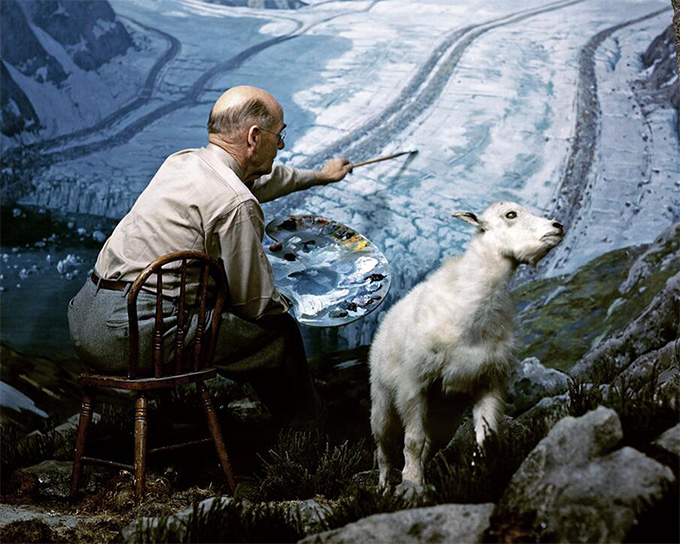
    In this 1966 photo, artist and explorer Belmore Browne paints a glacier behind a taxidermied mountain goat on display at the American Museum of Natural History in New York City.
    In this 1966 photo, artist and explorer Belmore Browne paints a glacier for a diorama of mountain goats. The goats are on display at the American Museum of Natural History in New York City.AMERICAN MUSEUM OF NATURAL HISTORY

    This “diorama dilemma” is forcing modern museums to reconsider how they present exhibit such scenes. Some museums have reduced or removed them. Other curators and artists are playing with new diorama formats. Still others are reframing old dioramas to address misleading or racist depictions.

    What this means: Diorama halls of the future might look a bit different from those you grew up with.

    This revamp “needs to happen,” says Aaron Smith. He’s director of exhibits at the California Academy of Sciences in San Francisco.

    The new age of museum makeovers doesn’t spell an end for dioramas. For decades, these displays have evoked a sense of “awe and wonder,” Smith says. “That still exists.”

    Dioramas’ troubled history

    It’s hard to pinpoint the very first dioramas. Charles Willson Peale made one of the earliest in the 1780s. Peale practiced taxidermy. That’s the craft of stuffing dead animals to preserve them with a lifelike appearance.

    At his own home, Peale set up a mound of earth covered with turf and trees, plus a fake pond. There, he placed taxidermied birds, snakes, a tiger and other specimens.
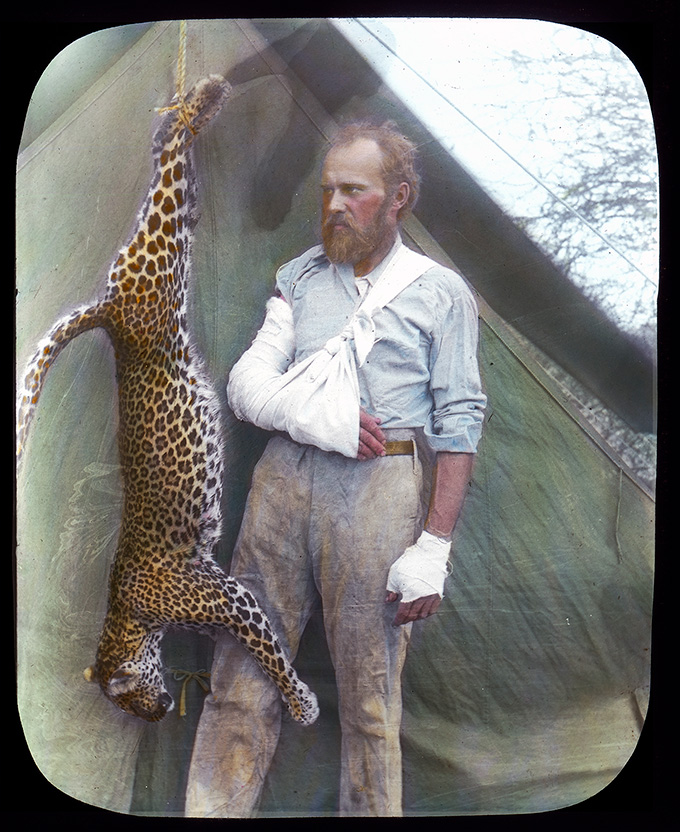
    1896 photograph of taxidermist and big-game hunter Carl Akeley posing in profile beside a dead leopard hung upside-down by its back legs. Akeley has his right arm in a sling and his left hand is bandaged. His mussed hair, beard and soiled pants give the impression of a hardened outdoorsman.
    Taxidermist and big-game hunter Carl Akeley was photographed in Ethiopia in 1896 after he killed a leopard — reportedly with his bare hands. Akeley created some of the earliest museum dioramas.C.E. AKELEY/©FIELD MUSEUM OF NATURAL HISTORY

    By the early 1900s, natural history museums started making habitat exhibits like this. These dioramas were often created by taxidermists who led hunting trips to shoot the most spectacular specimens — including endangered animals.

    Hunters saw their work as one way to preserve the last of disappearing species. They also hoped these dioramas would inspire viewers to conserve the animals that remained in the wild. But they were killing endangered animals to do this. And in many cases, the hunting trips offered an excuse for rich, white men to get out their guns and kill big game for sport.

    “A lot of this was boys with their toys,” says Marjorie Schwarzer. She wrote the book Riches, Rivals and Radicals: A History of Museums in the United States.

    Sometimes hunters recognized the conflict between their hunting trips and the goal of conserving species. Carl Akeley was one example.

    He shot mountain gorillas in what was then the Belgian Congo. The experience changed him. He persuaded the king of Belgium to set up Africa’s first wildlife sanctuary. Today, it’s called Virunga National Park. It’s home to some 350 endangered mountain gorillas in the Democratic Republic of Congo.

    Diorama-maker William Temple Hornaday also had a change of heart. He went to Montana in 1886 to collect bison for the Smithsonian Institution in Washington, D.C. On that trip, he was shocked by how fast the bison population was shrinking. So he brought live animals back to D.C. In 1889, they became the first animals in what would become its National Zoo.
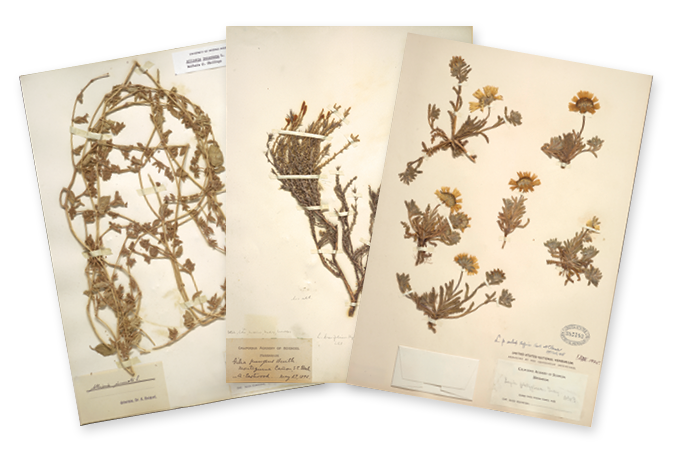
    Plant samples collected by botanist Alice Eastwood are displayed fastened to three yellowed pages with printed text and hand-written notes.
    Not all early trips to gather diorama materials were about big-game hunting. Researchers collected plants, insects and other specimens too. Many of these explorers were women. The plants shown here were collected by botanist Alice Eastwood. Such samples went into museum collections and could guide the creation of realistic habitats for dioramas.A. Eastwood/Smithsonian National Museum of Natural History

    Are dioramas worth saving?

    A century later, museums were starting to wonder if dioramas still had value. Many were unscientific. For instance, they tended to overuse large male animals and overlook females. Dioramas also had to compete with new multimedia exhibits.

    In the early 2000s, some museums scrapped or cut back on dioramas. Others tried to modernize them with interactive parts and animatronics. But those choices weren’t always rooted in any science on the value of dioramas.

    The Oakland Museum of California took a different approach. It asked Schwarzer and a curator to study people’s reactions to dioramas. The pair looked at 30 studies of more than 3,800 people viewing dioramas at 17 institutions.

    In 2009, the researchers came up with a strong case for dioramas. It turns out that the displays are second only to dinosaurs in getting visitors to stop and look.
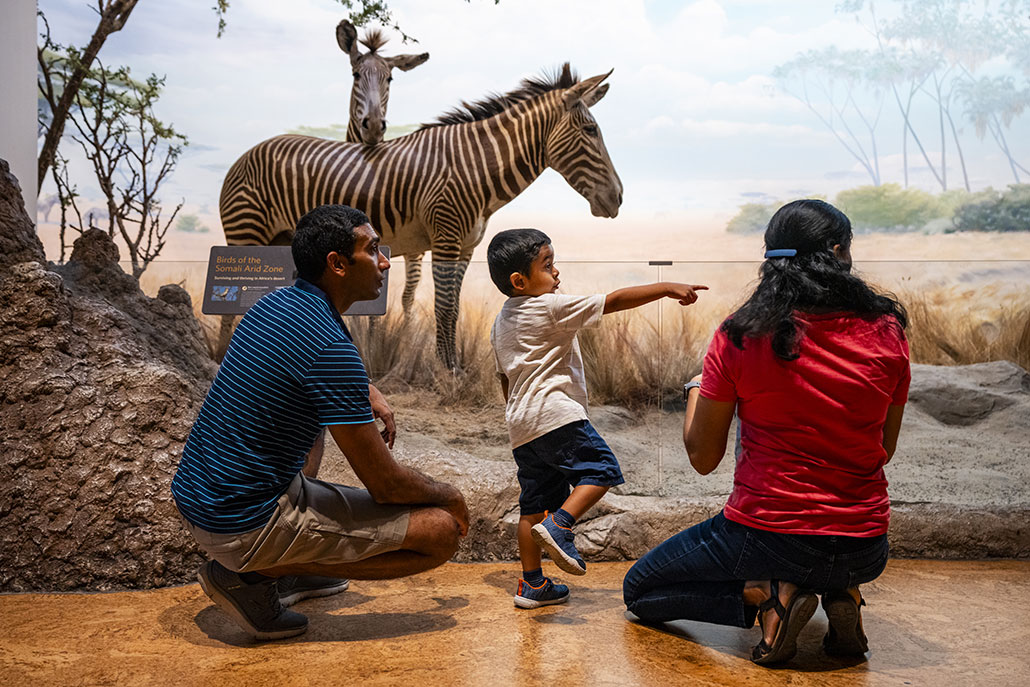
    a young boy points out something to his parents next to a zebra diorama
    Research has shown that most museum visitors really like dioramas. California Academy of Sciences

    Dioramas didn’t change how people felt about conservation, the study found. But they did reinforce concerns people already had about the environment. They also sparked a range of emotions. Some viewers felt creeped out by dead animals. But most people loved these exhibits.

    Museum staff see similar responses today. “I do walk-throughs all the time of the museum, and I can hear the ‘Whooooaaaa!’ ” says Mariana Di Giacomo. She’s a natural-history conservator at the Yale Peabody Museum in New Haven, Conn. The Peabody’s oldest and largest dioramas show Connecticut’s coastal region and a forest edge.

    Chicago’s Field Museum recently got public support to finish a diorama started more than a century ago. Akeley had mounted four striped hyenas shot in 1896. But they never got the full scenic treatment. In 2015, the museum launched a social-media campaign to finish the project. In just six weeks, some 1,500 donors raised more than $150,000.

    Gretchen Baker led planning for the museum’s exhibits at the time. “It showed us that there is an enduring interest in these dioramas,” she says.
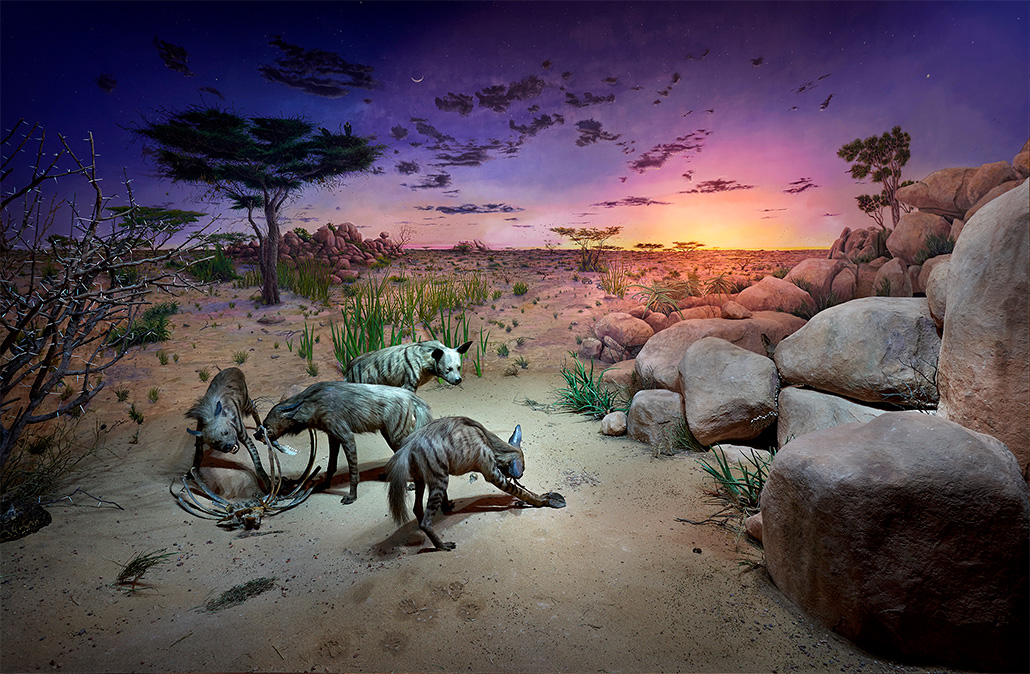
    Four taxidermied striped hyenas, collected by Carl Akeley in the late 1800s, have been posed chewing on a carcass in a diorama representing their arid habitat at sunset.
    These striped hyenas were collected by Carl Akeley in the late 1800s. After the Field Museum’s crowdfunding effort in 2015, they finally got the full diorama treatment.JOHN WEINSTEIN/©FIELD MUSEUM OF NATURAL HISTORY

    Battling biases

    Dioramas’ eye-catching nature gives them great storytelling potential. Unfortunately, the stories many tell are not entirely scientific.

    “A lot of people have called them, in the past, ‘bad science’ because they personify animals,” Schwarzer says. Many dioramas, for example, show animal groups that include a mom, dad and babies. But many species don’t live that way. Papa bear does not stick around to help raise the cubs. Indeed, Schwarzer says, “Papa bear might eat a couple of the cubbies.”

    Some exhibits misrepresent female animals, too, Baker notes. She now directs the Carnegie Museum of Natural History in Pittsburgh, Pa. One diorama there shows a female moose standing in water. This makes her look shorter than the male on land.

    Females are often the ones who lead animal groups in the wild. But Baker observes that they don’t usually take charge in dioramas. Likewise, homosexuality exists in nature but rarely shows up in dioramas.

    In many cases, designers likely wanted to show the different forms of the animals, says Mark Alvey. He works at Chicago’s Field Museum. Mom-dad-baby groups offer an easy way to show adult males, adult females and young all at once.

    “We always knew it was wrong,” Davis says. “Now, we’re slowly trying to fix some of those things.” For example, the L.A. museum has added more females to its lion pride.

    Do you have a science question? We can help!

    Submit your question here, and we might answer it an upcoming issue of Science News Explores

    The human element

    There also are problems in how people are — or aren’t — depicted in dioramas.

    Some ignore humans completely. This erases the long-term presence of Indigenous peoples in many places. It also ignores the impacts of modern societies on the environment. And that’s misleading. Today, very little of the world is untouched by humans.

    “The kind of nature that dioramas exhibit, it’s very unnatural,” says Martha Marandino. A professor of biology education, she works at the University of São Paulo in Brazil.

    a photo of a display showing a small market storefront, an umbrella covers the storeowner (a person dressed the part) and various goods are displayed on racks, shelves and even a turquiose blue bike wagon. The sign above the stall reads "KICHANGACHUI MKT"
    Something was missing from the African Hall at the Cal Academy of Sciences: the African people. So artist Walter Kitundu created an exhibit that illustrates a storefront from the market in Dar es Salaam, Tanzania, where he grew up.California Academy of Sciences

    New York’s American Museum of Natural History recently dealt with problems in its “Old New York” display. Made in 1939, it shows a fictitious 1660 meeting between a Dutch leader and high-ranking members of the Lenape Tribe. The Lenape people were the original residents of the land that would become Manhattan.

    Stereotypes riddle the display. Only Lenape men are in on the discussion. And they wear loincloths. That’s not how they would have dressed for a diplomatic meeting. Plus, only the Dutch leader, Peter Stuyvesant, was named in the original display.

    In 2018, curators added labels to explain problems with this display. They also added the name of the Lenape leader Oratamin.

    Sometimes, this type of reframing isn’t enough to fix a diorama’s problems.

    Take “Lion Attacking a Dromedary.” (A dromedary is a type of camel.) This display, created in 1867, showed a dark-skinned man on camelback under attack by lions. One lion was male, even though it’s generally females who hunt. Worse, the man was dressed in a mishmash of clothes that represented no specific culture. To top it all off, the mannikin head held a real human skull.

    The whole display had been created by known grave robbers.

    “It’s not educating anyone on anything that ever existed,” points out Aja Lans. She’s an archaeologist at Johns Hopkins University in Baltimore, Md.

    Andrew Carnegie bought the diorama in 1899 for his museum in Pittsburgh. In recent years, staff have tried putting up warning signs, so people could avoid the diorama. They also added labels to point out its problems.


    Educators and Parents, Sign Up for The Cheat Sheet

    Weekly updates to help you use Science News Explores in the learning environment

    Thank you for signing up!

    There was a problem signing you up.

    Then, in 2020, a white police officer murdered a Black man, George Floyd, and sparked a nationwide conversation about racism.

    “This diorama was kind of like a poster child for all of these questions that were coming up,” Baker says. “It was kind of this symbol of a time in natural history museums when we would display the other — the exotic — the colonized.” That summer, the museum covered the display completely.

    In 2023, the museum chose to no longer display human remains at all. So it shut down this diorama for good. It’s now being taken apart. Lans and colleagues are analyzing bits of teeth from the skull to pin down its origins. The museum hopes to return it to the country where the man grew up.
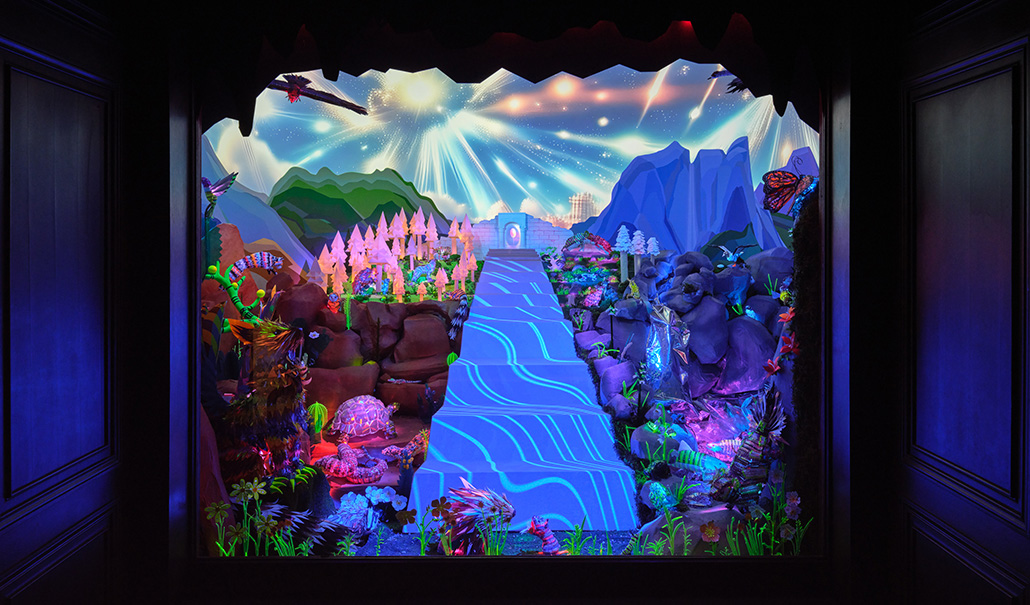
    Brightly colored materials adorn this whimsical diorama of a flowing river surrounded by flora and fauna under a starry sky at the Natural History Museum of Los Angeles.
    The “Special Species” exhibit uses Mexican folk art and an immersive multimedia display to highlight at-risk species in California.Natural History Museums of Los Angeles County

    Dioramas for a new age

    Back in Los Angeles, upstairs from the bison is a revamped diorama hall. It shows some drastically different scenes.

    One, called “Special Species,” pulses with changing lighting and bright colors. It’s home to piñata-style sculptures of at-risk California critters. There’s the Chinook salmon, for example, and the desert tortoise. The sculptures are in the style of fantastical Mexican creatures called alebrijes. (You might have seen some animals like these in the film Coco.)

    Artist Jason Chang, who goes by RFX1, was on the team that created the diorama. He hopes viewers will walk away with “an urgency to protect the environment.”

    “Special Species” is just one part of the exhibit “Reframing Dioramas: The Art of Preserving Wilderness.” This project highlights dioramas’ historical importance while adding modern science. “It’s a hall on dioramas, not a hall of dioramas,” Davis explains.

    In one new diorama, video projections show how the Los Angeles River has changed over the centuries. Another shows an eerie scene in which wildebeest sip from a polluted stream amid metal-plated plants.

    Still other displays show how traditional dioramas came to be. One shows a partially constructed diorama, still in pieces. Another features a hunting camp-style tent. That exhibit calls out the power imbalances at work when rich, white hunters traveled to extract specimens. Today, that display notes, most large specimens that the museum mounts died of natural causes. (They come mainly from zoos or wildlife centers.)

    For all their problems, wildlife dioramas still serve their intended purpose. They bring striking nature scenes to people who might never see them in the wild. They also retain their power to inspire wonder and a love of nature.

    The science and art of dioramas will continue to evolve. Davis hopes the L.A. museum’s new exhibit lights the way.

    “We don’t think this will be the last word on dioramas,” he says. “We hope it’s the first word.”


    Source link

    Share. Facebook Twitter Pinterest LinkedIn Tumblr Telegram Email

    Related Posts

    Ever wonder where our math symbols came from? Here are their stories

    February 19, 2026

    Some dog breeds carry a higher risk of breathing problems

    February 19, 2026

    New study links early smartphone ownership to health risks

    February 18, 2026
    Top Posts

    Simple blood markers that could detect ALS years before diagnosis

    July 29, 2026

    Francis Ngannou claims he is Man United’s ‘favourite heavyweight boxer’ as he teases Tyson Fury

    July 31, 2023

    Turn Your Favorite Pet Photos Into a Pawfect Portrait for Just $20

    July 31, 2023

    Mauricio Diazgranados Is a Botanist in a Hurry

    July 31, 2023
    Don't Miss
    Science

    NASA Picks Lockheed Martin to Build a Nuclear-Powered Rocket

    Science 3 Mins Read

    A Number That Sums It Up: 3 to 4 months to MarsWhat if a spacecraft…

    Hunt for trans activists who defaced statues: Met launch search for campaigners responsible for defacing seven monuments, including Millicent Fawcett and Nelson Mandela monuments

    April 20, 2025

    Unemployment at FOUR-YEAR HIGH as Reeves’ jobs crunch continues – with vacancies falling again and benefits claims rising

    October 14, 2025

    Home Depot’s Viral 12-Foot Skeleton Is Back in Stock

    September 21, 2025
    Stay In Touch
    • Facebook
    • Twitter
    • Instagram
    About Us
    About Us

    Delivering timely and accurate news updates, our website keeps you informed on the latest events, politics, entertainment, and more. Dive into captivating articles crafted by our team of expert writers, providing a comprehensive view of the world. Stay ahead with our trusted news source.

    Facebook Twitter Instagram
    Our Picks

    Secret ‘Project 2040’ video exposes Albo’s nemesis’s plan that could make him PM of a GREENS government by age 45 – and his plot is on track

    July 15, 2024

    Voice referendum fallout twist as Deputy Prime Minister Richard Marles says Labor is still committed to the Uluru Statement from the Heart

    October 16, 2023

    These Stone Age humans were more gatherer than hunter

    April 29, 2024
    © 2026 Designed by TopHeadlineSpot.
    • Business
    • Latest News
    • Politics
    • Health
    • Entertainment
    • Sports
    • Science
    • Tech

    Type above and press Enter to search. Press Esc to cancel.