


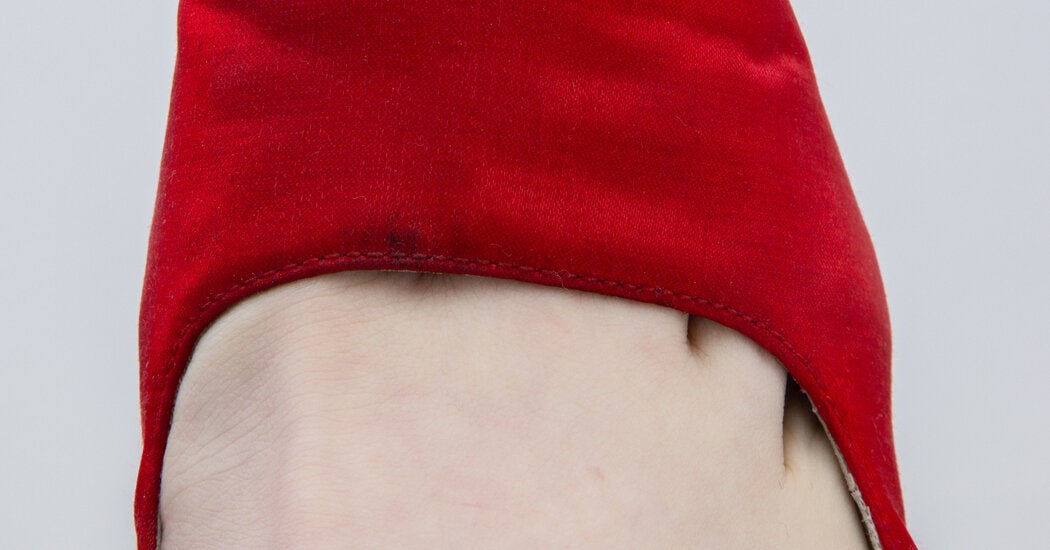
Q: I’m starting to notice bunions on my feet. What can I do to avoid surgery?
Kicking off your shoes at the end of a long day can be a relief — especially if you’ve developed bunions.
A bunion is a bony bump that forms at the base of your big toe. As your toe angles toward the others on your foot, the bone at the bottom of the joint moves away from them, making your foot wider.
Bunions can feel tender, sore or sharply painful and may make it difficult to walk or find shoes that fit without rubbing on them. Although bunions might seem like a minor problem, they can prevent people from exercising or doing their jobs comfortably, said Dr. Kelly Hynes, chief of the foot and ankle service at Washington University School of Medicine in St. Louis.
“Bunions usually get worse as time goes by,” said Robert Lee, chief of podiatric foot and ankle surgery at the University of California, Los Angeles, Santa Monica Medical Center, but they don’t always get bad enough to require an operation.
We asked experts about how to manage the discomfort and when to consider surgery.
What causes bunions
Whether you develop bunions largely depends on your genes, Dr. Lee said. While the bump isn’t there when you’re born, “you’re actually inheriting a foot type that’s prone to forming the bunion,” Dr. Lee said.
People with flat feet or especially flexible joints may be more likely to develop bunions, said Dr. Dane Wukich, an orthopedic foot and ankle surgeon in Pittsburgh. Having arthritis or a previous foot injury can also increase your risk.
Bunions are more commonly reported in women than in men. This may be because women are more likely to have joints that are hyper-mobile, or highly flexible, which can make them more susceptible to developing bunions, Dr. Hynes said.
Women’s shoes also may be more constrictive and pull your toes inward, which can cause friction and pressure on bunions that typically make them more painful, Dr. Lee said. But researchers aren’t sure whether footwear alone can cause bunions.
Treating pain
You can’t reverse a bunion once it’s formed, the experts said, but there are ways to manage the pain.
Dr. Wukich recommended looking for shoes that have ample space for your toes but are still snug in the heel. Shoes with laces can help keep your foot in place. Dr. Lee said that footwear that uses softer materials, such as mesh, around the toe area can be more forgiving on bunions than stiffer materials like leather. “The main thing is finding a shoe that fits your foot and not making your foot fit the shoe,” Dr. Hynes said.
Hayley Schanback, a physical therapist at Mount Sinai Health System in New York City, said that strengthening the muscles that stabilize the arches of your feet — such as by practicing moving each toe independently, or by doming and collapsing your arches — can reduce your pain. Some small studies have suggested that using a silicone toe spacer, which separates the toes, can reduce pain. But “you can’t expect that bump on the foot to change,” Dr. Schanback said. At best, Dr. Lee said, you may be able to slow its progression, though not all experts agree that’s possible.
Research suggests that shoe inserts that provide arch support and splints that are meant to correct foot alignment cannot cure bunions, but they may reduce discomfort. In the short term, over-the-counter pain relievers like ibuprofen and acetaminophen can also provide relief. Though steroid injections can temporarily reduce inflammation and pain, Dr. Lee said, they’re not long-term solutions.
When surgery can be the right choice
If these strategies make your bunion feel better, you may not need surgery — even if your foot looks significantly misaligned. “We generally don’t operate on people who don’t have painful bunions,” Dr. Wukich said.
Surgery can lead to scarring, swelling and pain and the bunion may come back, he said, so doctors typically recommend exhausting all conservative options before surgery. It might be the right option if your big toe is causing a hammertoe, in which the second toe buckles up in the middle, since that toe can then dislocate, Dr. Lee said.
If your pain is getting worse or is affecting your daily routine, the experts said you should consider seeing a podiatric surgeon or orthopedic surgeon who specializes in the foot and ankle and has experience performing bunion surgeries.
Dr. Lee said that compared with a few decades ago, surgeries now involve smaller incisions and cause fewer complications. While surgery still often requires months of recovery, he said, it “can really improve quality of life” for those in significant pain.