



Step, shake, clap. A group of teens moves to the beat. In a video of their dance, colorful starbursts break out from their hands. These girls created their own moves. For the video, they also coded visual effects that respond to those motions.
Combining dance with coding opens up all sorts of creative possibilities.
“If you put your right fist in the air, you could trigger lightning to come down,” says engineer Kayla DesPortes in New York City. At New York University, she studies ways to teach computing. The teens created these flashy effects with a technology called danceON. Kids have been learning to use this tool at a yearly summer program called STEM From Dance.
The program’s goal: Make sure girls of color know that they can be part of STEM fields, founder Yamilée Toussaint explains in a video. “They can be the future engineers and scientists that our world needs.” (STEM stands for science, technology, engineering and math.)
Western science has not always been open to everyone. The stereotype that only certain types of people belong in science and engineering has been tough to shake off. But many researchers are working to change things.
Here, we meet some of the people who are reimagining how we do science. Their visions — and dances, sounds and gatherings — help bring science to everyone. At the same time, they’re expanding what science and engineering can be.
Dance, dance, code
DesPortes uses dance as a fun and empowering way to introduce coding and engineering.
“Any kind of dancing, I’m there,” says DesPortes. In college, she joined a salsa rueda dance troupe. They would form a circle and dance in response to a leader who called out moves.
At first, dance was just her hobby. After college, she worked as an electrical and computer engineer. But at work, she didn’t meet many people who looked like her or shared her culture. “It’s not a very diverse field,” she says. She found that strange. After all, pretty much everyone uses computers in some way. “When you think of how computers are integrated into our lives,” she says, “there’s nothing narrow about it.”
So DesPortes decided she wanted to do more than just build technology. She wanted to explore new ways to use it. “How can it be used to communicate things? How can it make you feel things?”
When she got a chance to start working with STEM From Dance, she was thrilled. Girls in this program work together to create dances. At the same time, they use tech to express themselves. “The way these students describe their dances, it is a representation of themselves, their identities, their interests,” she says.
Unfortunately, DesPortes found that available tech-teaching tools were “really bad for anything having to do with body and movement.” So she set out to design one herself. It had to be easy for anyone to start using — and push them to learn new things.
It also had to fit with the girls’ visions for their dances. “You can’t make them do a dumb dance,” DesPortes jokes.
During the COVID-19 pandemic, she became part of a team that developed danceON. At the time, “TikTok dances were popping off,” she recalls. So it made sense to give young people the ability to code special effects onto dance videos and share their work virtually.
Since then, DesPortes has been developing a new tool: DanceBits. Its wearable system of sensors connect to lights. Dancers can program the lights ahead of time. Or they can tap the sensors while dancing to turn lights on or off — even to change color.
This lets dancers improvise, DesPortes explains. They can “experiment and play with the technology and movement.”
DesPortes loves guiding students as they create incredible dances and learn about tech. But there’s more to this. “The students have agency and control over all the decisions [about the tech],” she says. When it comes to your phone, social-media accounts and chatbots, she notes, “big tech has control of it all. But that doesn’t need to be the case.”
Many times, DesPortes has seen a transformation. A young girl who had never seen herself in tech now realizes, “I’m a STEM person. I’m a computing person.”
Sounds of science
Amy Bower works at Woods Hole Oceanographic Institution in Massachusetts. This ocean scientist has worked on ways to represent data as sound. It gives anyone who learns best through listening a new way to understand data.
Growing up on the Massachusetts coast, “I was naturally very interested in what the ocean was doing all the time,” she noted in a Tumble Science podcast. She looked for critters under rocks. She loved watching storms. She also asked herself many questions. For example: Why are the waves bigger today? What makes the tides work?
It was no surprise when she decided to study oceanography. While in graduate school, though, she began slowly losing her sight. Doctors told her there would be no cure. Over time, she went blind.
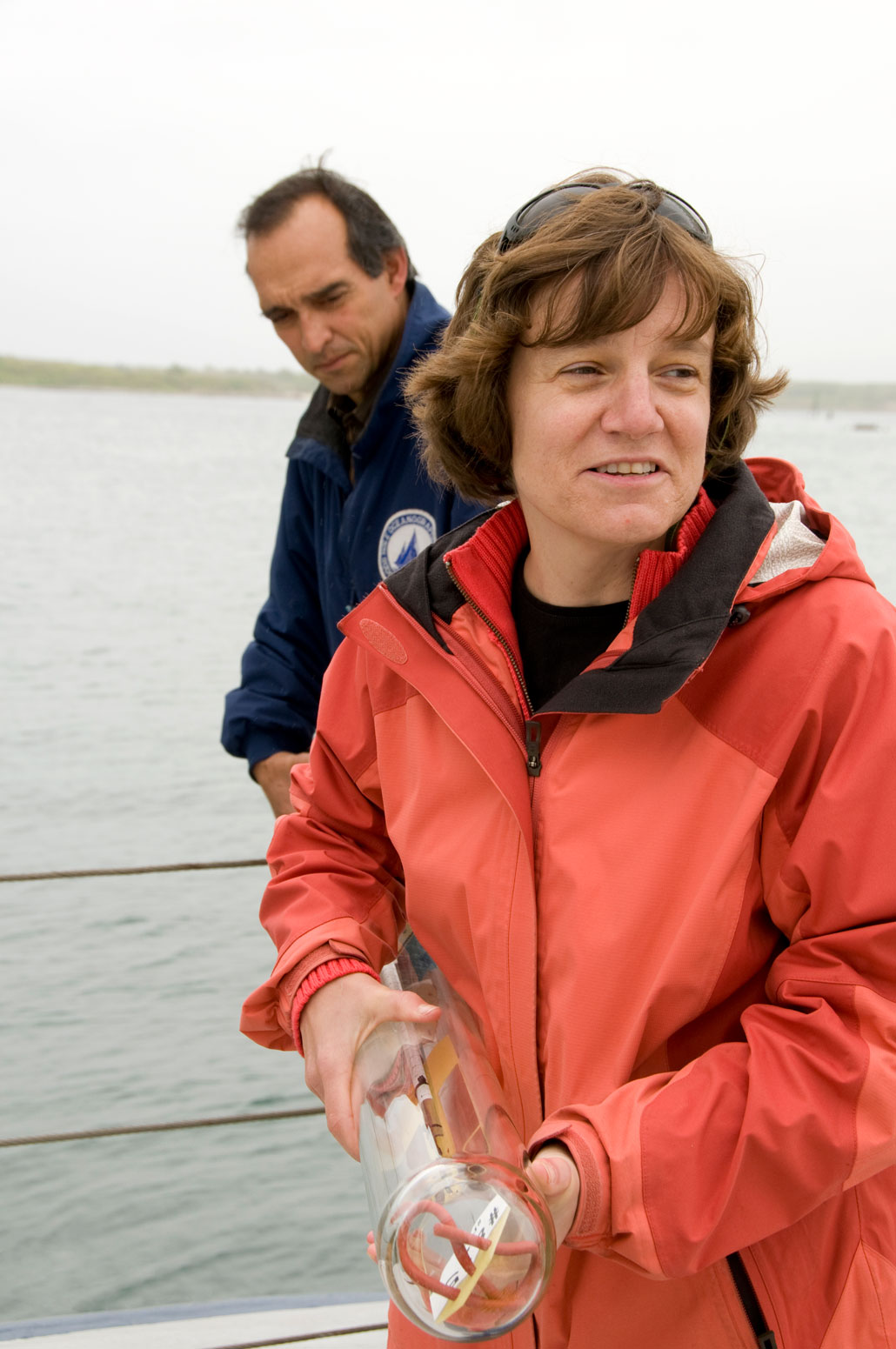
“It was kind of a lonely feeling,” she recalls. “I didn’t know anybody who was visually impaired.” At times she even wondered if it might end her career as a scientist.
In the end, she says, “I decided to try it anyway, just one day at a time.” It also meant, she adds, that “I had to adapt the way I did research.”
For instance, she now uses software that reads aloud what’s on her screen or describes what’s showing up on her phone or computer. She also uses something called swell paper. When you put it under a heater, anything drawn in black ink becomes a raised, touchable line or shape.
These approaches have helped her interact with text, pictures and visual charts or graphs.
Despite this, Bower worried about other young people facing such challenges. “It’s just heartbreaking to think that there could be a kid who has the same curiosity and interest in the world [as I did],” she has said, “but can’t access stuff because they’re blind.”
In 2021, she started the Accessible Oceans project. Her idea was simple: Turn ocean data into something you hear instead of see. How? “Take data or numbers and represent them as sounds instead of dots on a graph.” In a sense, she says, this “data sonification is for our ears what data plots are for our eyes.”
People who had trouble seeing wouldn’t need to take any special steps to understand these data.
Her team created several types of sonified data. One portrays an underwater volcanic eruption. Teachers and students at the Perkins School for the Blind in Watertown, Mass., helped test the tech. Next, museums and aquariums presented the sonifications during special events. Anyone could stop and listen.
At one event, a woman told Bower that she had hated science as a kid. But then she listened to the sonification. “She was just amazed,” recalls Bower. “It connected for her.” This showed how sonified data can help anyone, she says — “not just those who are blind or have low vision.”
Bower’s team has moved on to portraying more complex sets of data. These might include maps of ocean reefs or other habitats — and might engage more senses.
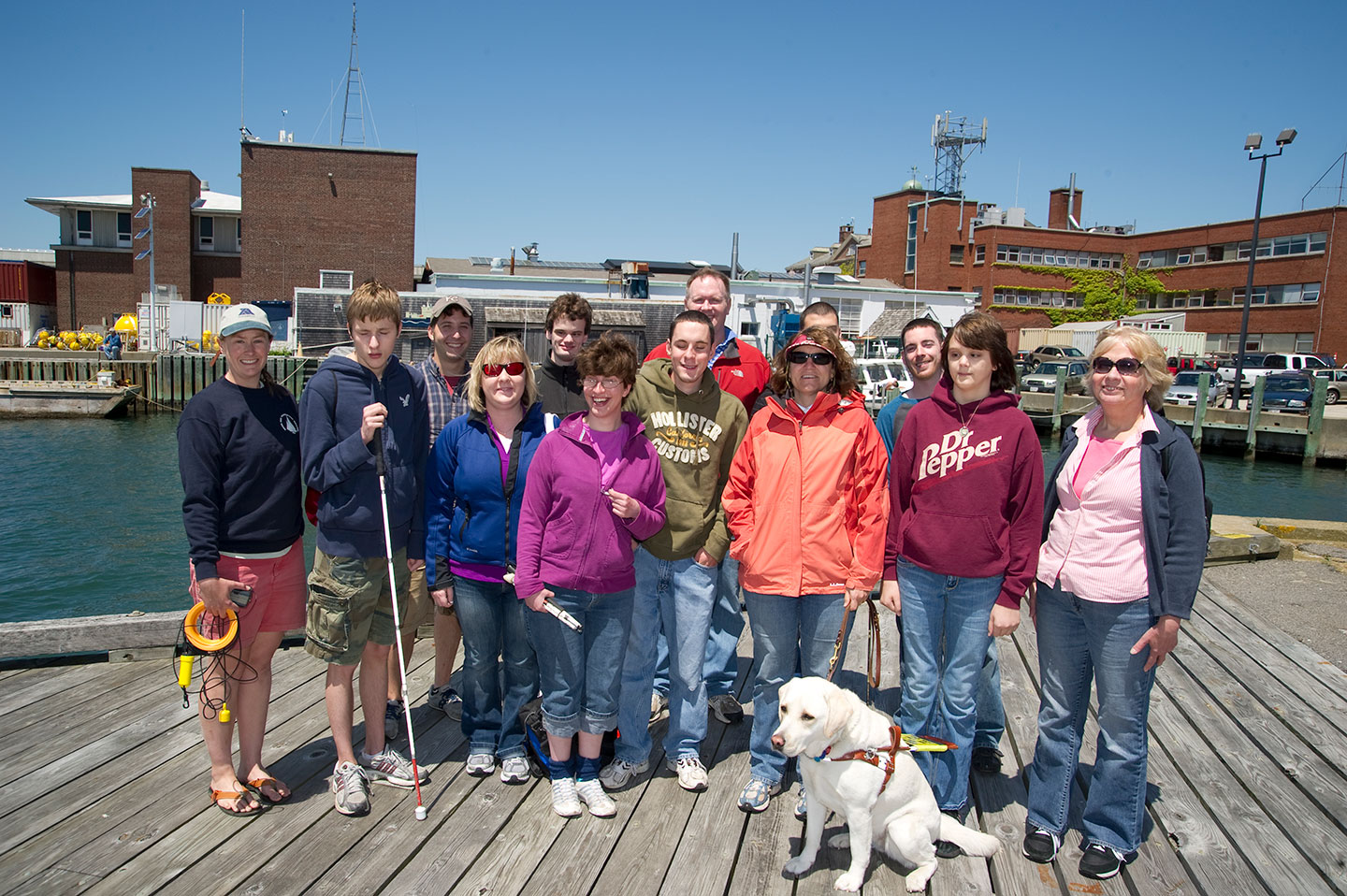
Jessica Roberts, who worked with Bower on sonifications, is heading up this effort. At Georgia Tech, in Atlanta, Roberts’ work focuses on creating new types of learning experiences. “Multisensory experiences are better for all learners,” she says. The brain evolved to operate best with all its senses engaged, research has shown.
Roberts is now at work on several interactive exhibits. One might project a map of the ocean onto the floor. As you walk through it, you might hear sounds that correspond to the habitat in that environment. She hopes to design experiences that would work even for people with hearing or vision loss — or someone with limited mobility.
She wants to make it the richest “possible experience for everyone who approaches it.”
That includes people who may previously have felt excluded from science. “There’s a lot of data out there,” she says. It’s a “huge gap in public understanding” waiting to be filled. In the worst cases, there’s even “an us versus them mentality,” she says, where people mistrust or disbelieve what science discovers.
This might begin to change, she hopes, if there are more ways people can engage with science and the scientific process.
Land, food and community
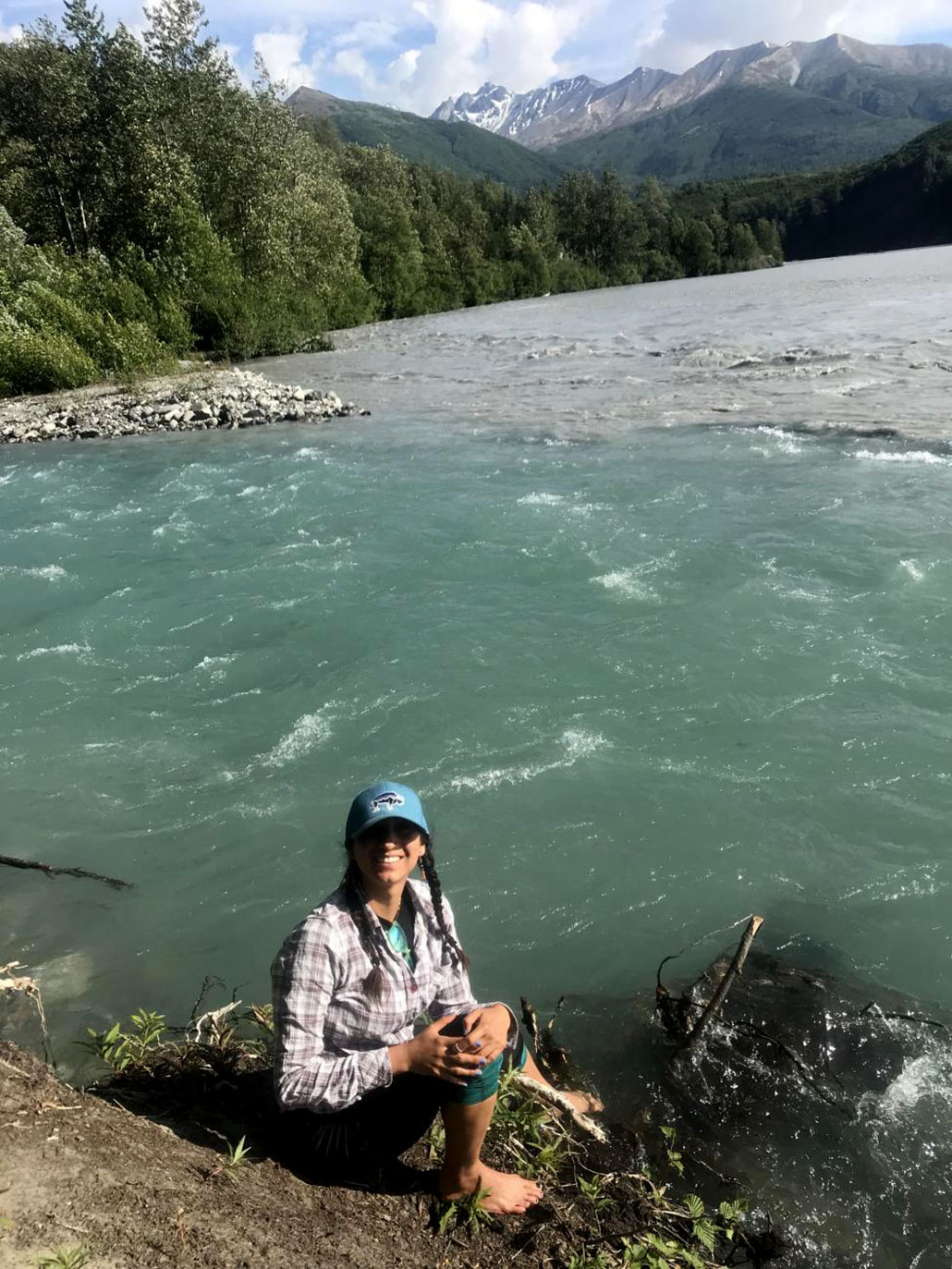
Lydia Jennings works at Dartmouth College in New Hampshire. She also prides herself on being a member of the Pascua Yaqui and Huichol Nations. “Traditionally,” she notes, “Indigenous knowledge and ways of knowing have not been seen as legitimate science.” Even worse, European colonizers for centuries tried to erase Indigenous cultures in America and elsewhere.
She and others are now working to repair that rift between science and Indigenous knowledge. For instance, Jennings works with her own and other communities on ways to do science while also embracing Indigenous cultures and ways of knowing.
When she earned her Ph.D. in soil science, Jennings celebrated by running 50 miles — all in one day! “I’ve always been a really avid runner,” she says. For each of the first 49 miles in that epic run, she honored a different Indigenous scientist or scholar. Jennings dedicated the last mile to the Indigenous researchers of the future.
In 2019, a few years before that celebratory run, Jennings took a trip to Nenana, Alaska. She was working with the Indigenous Food Knowledges Network, which held a series of meetings. These connected Indigenous communities from different places. On this trip, Hopi farmers and others from the American Southwest visited an annual culture camp at Alaska’s Chickaloon Native Village (or Nay’dini’aa Na’Kayax’).
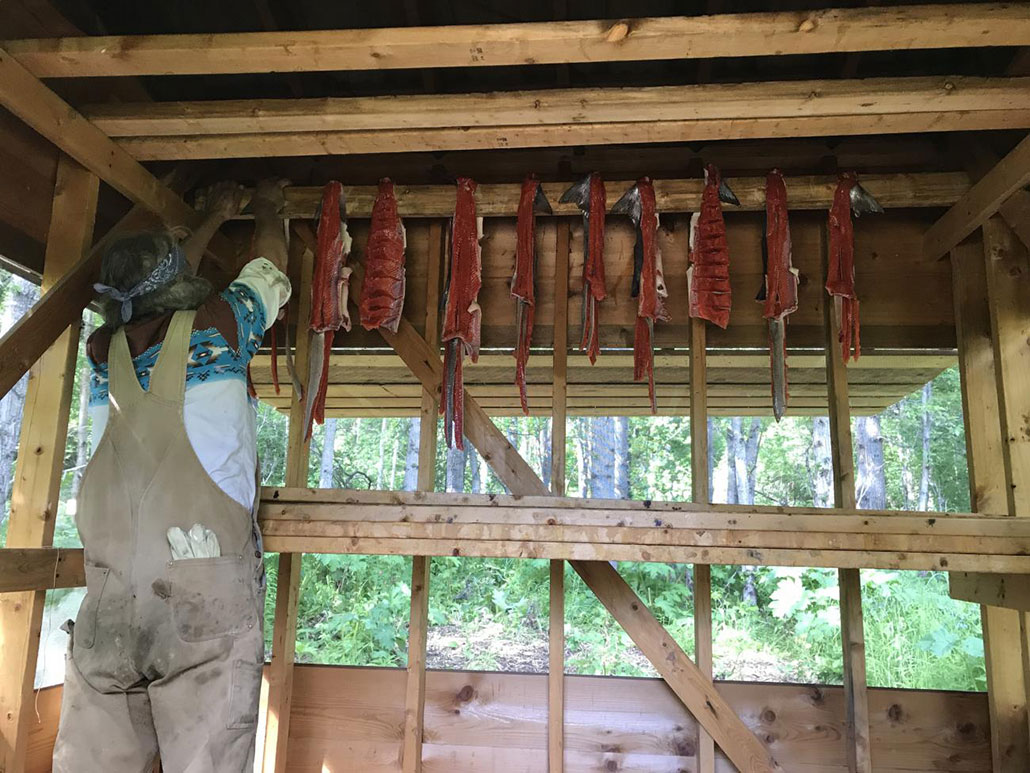
Mainstream science often turns to a lab to build knowledge. Researchers there run controlled experiments, separate from the natural world. This is in sharp contrast to how most Indigenous cultures build knowledge, Jennings says. “One of [their] primary priorities is community. It’s the relationships.” These relationships aren’t just with other people, but also with the land, plants and animals.
At the culture camp, people discussed their farming and fishing practices, as well as challenges they faced. Jennings saw young people learning to fillet salmon. They also learned to make natural insecticides. (“The mosquitoes!” she notes. “They were, like, massive.”)
People also shared seeds and knowledge about growing crops. Important conversations about such things just happened, she saw, “in unplanned time.”
This may not have seemed like science to someone from a non-Indigenous background. But it was, she says. In Jennings’ and many other Indigenous cultures, “data comes from our ecosystems, comes from language, comes from our elders,” she says. “You can’t teach that through a PowerPoint.”
Though the Indigenous Food Knowledges Network project ended, the relationships it forged live on. And many new efforts have begun. Jennings is now working with a group called the Global Biodiversity Information Facility. She seeks to bring Indigenous ways of knowing into the work it’s doing to protect ecosystems around the world.
She’s also bringing the results of laboratory science back to Indigenous communities.
For instance, she’s spoken with some of their farmers on the use of artificial intelligence in food production. And in the summer of 2025, she returned to the same Alaskan native village. This time she led workshops for teens. They collected data about the local ecosystem. They also discussed how their own personal data gets gathered and shared online — and how to protect important data from misuse.
“Indigenous people have always been data creators. We’ve always been data stewards,” she says. “Today that looks different. We have different tools and technologies.” But the drive to learn about the world and share that knowledge is part of “our core identity,” she says.
Do you have a science question? We can help!
Submit your question here, and we might answer it an upcoming issue of Science News Explores
Concludes Jennings, combining different ways of understanding the world “make science better for everyone.”
The work that DesPortes, Bower and Roberts are doing has the same goal. They are helping more people get involved in science through dance, sounds or other creative methods. This expands what science can be and who it can reach.
If you only teach code on a computer screen, says DesPortes, “then you’ve limited what it means.” You’ve created a wall that keeps some people out of tech. But take code and electronics into a dance, she says, and that changes things. “We can break down these walls,” says DesPortes. That makes space for new communities of scientists and engineers to grow.