


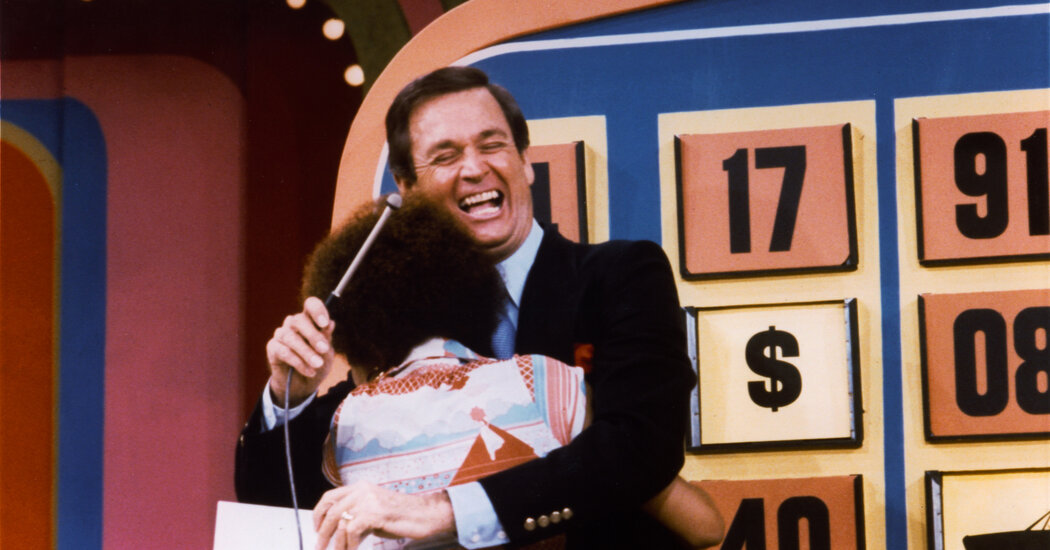
Reliable, consistent, even courtly, Barker smiled through it all. And at the end of every episode, he reminded us to spay and neuter our pets. He wanted us to choose responsibly, to bid judiciously. He saw us through inflation, recession, bubble and boom and bust. He was America’s dad. Then its granddad. Had a sexual harassment suit by Dian Parkinson, one of “Barker’s Beauties,” gone forward, he might also have been seen as America’s lechy uncle. (The suit was eventually dropped, though other women received payments after suing the show for sexual harassment, racial discrimination and wrongful termination.)
There’s a frenzy, a late-capitalist absurdity to “The Price Is Right,” which continues under the gleeful ministrations of the comedian Drew Carey and requires little in the way of knowledge or skill, beyond a vague sense of what things cost at the supermarket. (An unusually dark aspect of the Carey era: a new game called Pay the Rent.) The show supports the very American notion that everyone deserves something for nothing — or at least, something for knowing the price of a box of raisins and having the upper body strength to spin a wheel. A show in which men made the rules and did the talking while women posed in short skirts, that feels an unfortunate kind of American, too.
Contestants lucky enough to come on down won prizes that some of them could not have afforded otherwise, prizes that they may not have wanted and cars excepted, probably did not need. People populated that studio audience because they weren’t at work, because work couldn’t substitute for the excitement of being on television. Most jobs would not give them an RV just for nudging a number higher or lower. There are reasons that it is America’s longest running game show.
If we watched the show in the Barker years, if we watch it now, that likely means that we weren’t at work either. The hunger for wealth, for merchandise, can feel like a fever. So it makes sense that this is what we tuned into when we were sick, when we were low, when we had slipped, owing to illness or age or some other factor, out of the workday world.
Barker worked hard. No one could deny it. He seems to have been paid handsomely for his labor. (The models who caressed all that stereo equipment, not so much.) He was calm while the contestants had hysterics, smooth while they behaved erratically. If he wanted a new car, no yodeling would be required, no frenzy. He understood his position, his reputation, and could happily satirize it in side projects like his cameos in “Happy Gilmore,” “The Nanny,” and “How I Met Your Mother.”